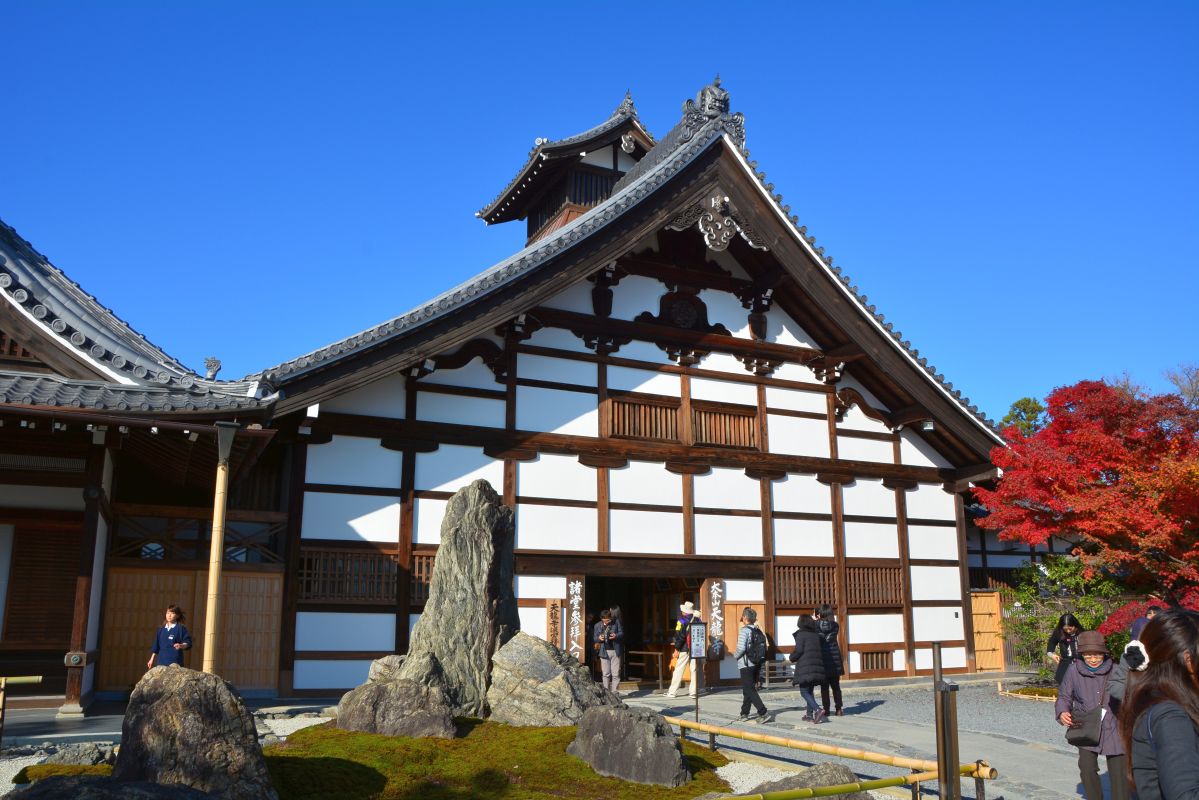
Kinkakuji (金閣寺) – the Golden Temple in Kyoto, or Golden Pavilion, is situated in northern Kyoto. It takes only 130 minutes by Shinkansen to get from Tokyo to Kyoto, one of the most interesting locations in Japan. With over 1,600 Buddhist temples and 400 Shinto shrines, bloomsome gardens, the place is one of the most visited among tourists. The Kinkaku-ji, or Golden Temple Kyoto, or Golden Pavilion, is a must-visit.
Golden Temple Kyoto.
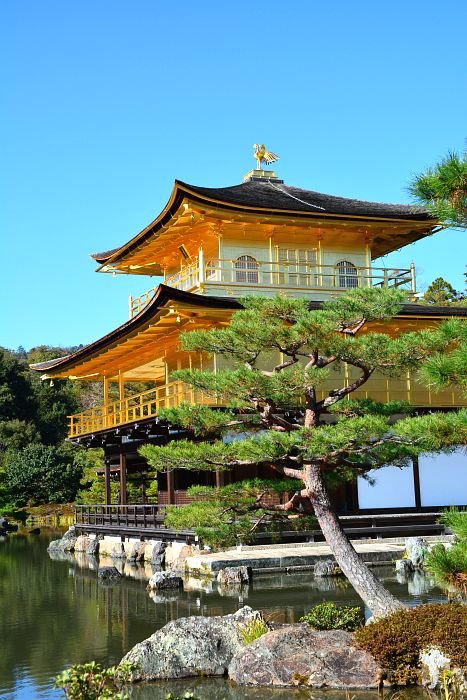
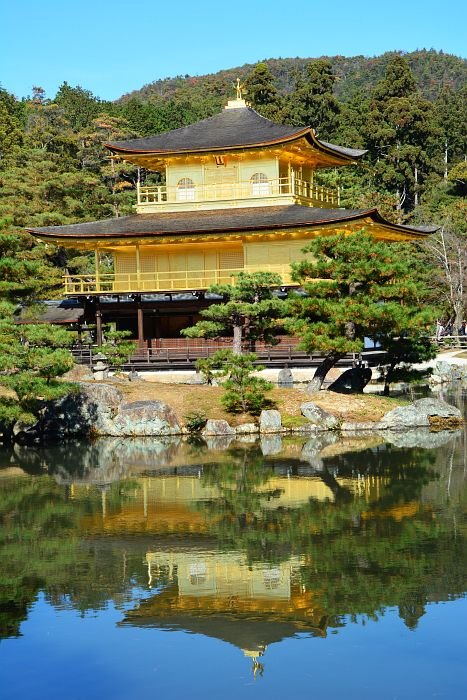
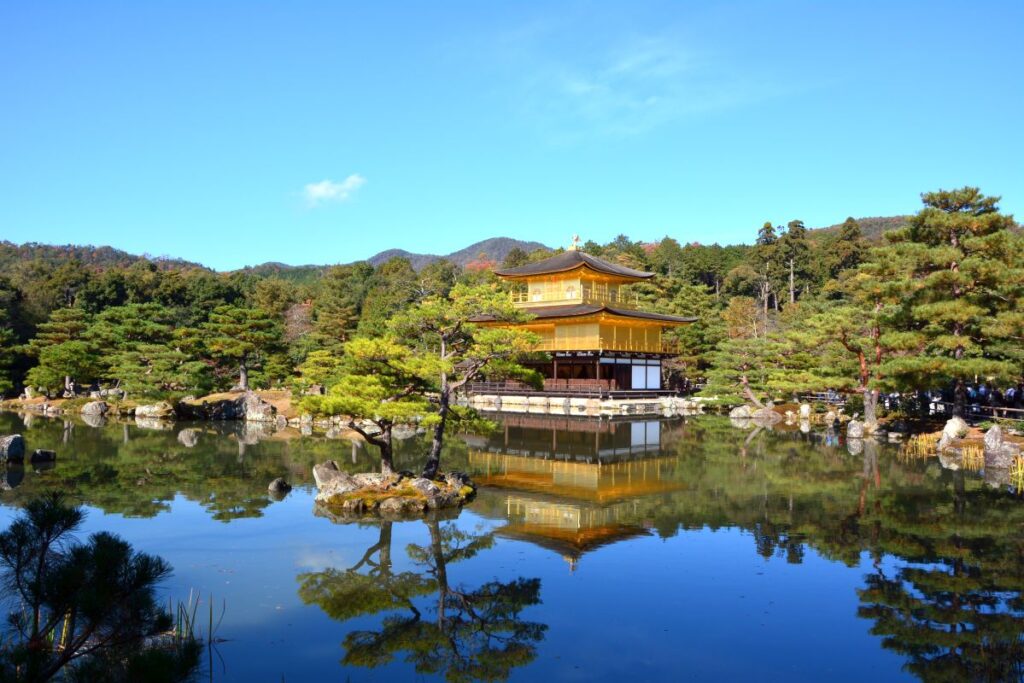
The Golden Pavillion – the Zen Buddhist temple is covered in gold leaf, reflecting in the waters of its surrounding pond—honestly, this was one of the most stunning pictures I’ve witnessed during years of travelling.
Yes, sunny weather is key to the right impression. The morning light on the gold is spectacular, and you’ll actually be able to get that perfect shot.
DID YOU KNOW: The Golden Pavilion is covered in real gold.
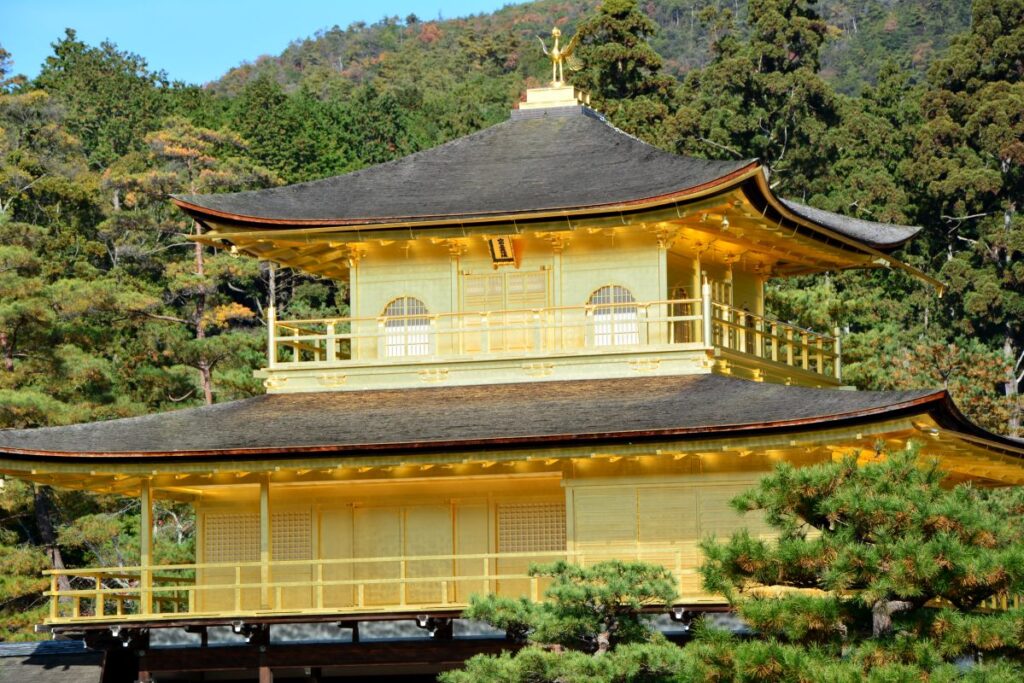
The top two floors of the temple are coated in genuine gold leaf, which is why the pavilion glows brilliantly in sunlight and reflects beautifully on the surrounding pond.
How to get to Kyoto from Tokyo?
Travelling in Japan is extremely easy and high-standard, thanks to the advanced bullet trains, the Shinkansen, which operate at a maximum speed of 320 km/h. If you are travelling from Tokyo, here is all you need to know:
Shinkansen schedule: JR website.
Getting there: Get your 7, 14 or 21 JR Rail Pass here.
Get 5G eSIM for Japan for less than $1.
It takes 2.5 hours to get from Tokyo to Kyoto by Shinkansen train.
I would highly recommend visiting the iconic Gold Pavilion, the incredible Fushimi Inari Temple and travelling to Nara National Park to spend a few hours in the park with deers.
Golden Temple Kyoto opening hours.
Kyoto’s Golden Temple, Kinkaku-ji, is open daily from 9:00 AM to 5:00 PM (17:00) year-round.
Admission fee of 500 yen/adults
Kinkakuji was built as a retirement villa for one of the shogun. It is November so the Autumn colours across the hills and lakes are incredible and in my opinion, it is the best time to visit this place.
But the Golden Palace is something absolutely breathtaking. The weather there is sunny and windless, so the golden structure reflects in the surrounding lake. No words can express the view better than Nikon 🙂
Getting to Golden Pavilion in Kyoto.
Getting there: There are many options to get to the Golden Temple by public transportation. Take bus #205 from Kyoto Station (about 40 minutes), or take the subway to Kitaoji Station and then a bus. Kitaōji Station is located 3 kilometres from the Golden Temple; many visitors decide to walk the distance.
TAXI
After 6 days of intensive walking in Tokyo (at least 20 kilometres per day), my feet needed a rest, so I took a taxi to the Golden Pavilion. A taxi is not that expensive, but of course, you have to agree on the price before you go!
What to see near Golden Temple Kyoto?
There is one spectacular place you should never miss – The famous red temple Fushimi Inari Shrine (Fushimi Inari-Taisha), known for its thousands of torii gates forming tunnels up Mount Inari.
Silver Pavilion – Ginkaku-ji, officially named Jishō-ji, is a Zen temple, better known as Silver Pavilion in Kyoto. Some say it’s equally beautiful as the Golden Temple. There’s an entry fee of 500 yen for adults; the ticket grants access to the stunning sand gardens and walking paths.
Golden Palace history.
Kinkakuji, built in 1393, was a retirement villa for Shogun Yoshimitsu Ashikaga. He lived a luxurious life there, and the temple is gold to show his power and authority. What’s really interesting is the fact that the temple parts are in a different style of architecture. The third floor is built in the old Chinese style and it was used for meditation. Kinkakuji burned down several times during the Onin War; the present structure dates from 1955. The temple was re-covered in gold leaf, five times thicker than the original layer.
The best time to visit the Golden Pavilion.
The reflection is part of the experience:
The temple sits beside the Mirror Pond, designed so the golden pavilion appears doubled in the water — especially stunning during autumn and winter. I was visiting in November and the air was crystal clear, with no wind.
The Golden Temple in Kyoto is beautiful in every season.
Whether surrounded by summer greenery or snow-covered gardens, the Golden Temple changes character throughout the year.
Golden Palace – Kinkakuji (Golden Pavilion) is situated in northern Kyoto. Its top two floors are completely gold. Kinkakuji was the inspiration for the Ginkakuji – Silver Pavilion.
The landscape is amazing. It is November, so the Autumn colours across the hills and lakes are incredible, and in my opinion, it is the best time to visit this place.
The Golden Palace is something absolutely breathtaking. The weather there is sunny and windless, so the golden structure reflects in the surrounding lake. No words can express the view better than Nikon 🙂
Tractical tips for Kyoto.
Money Matters
Japan is still largely cash-based, especially at smaller restaurants and shops. ATMs at 7-Eleven and Family Mart accept foreign cards. Budget roughly:
- Budget traveler: ¥8,000-10,000/day
- Mid-range: ¥15,000-20,000/day
Get Kyoto & Osaka Sightseeing Pass for exclusive offers, savings and unlimited travel on the Keihan Line and Iwashimizu-Hachimangu Cable Line for 1 day!
Get a Cultural Pass Kyoto.
Rent a bicycle—Kyoto is incredibly bike-friendly, and you can cover way more ground. Rental shops are everywhere, especially around Kyoto Station. Cost: about 1,000-1,500 yen per day.
Ginkaku-ji – the Silver Pavilion.
It’s quite easy to travel between the Golden and Silver Pavilion.
- Kinkaku-ji – the Golden Pavilion is the most popular
- Ginkaku-ji – Silver Pavilion
You can easily get from one Pavilion to another – by bus, taxi or by walking.
BY BUS:
Take the Kyoto City Bus number 204 from the Kinkakuji-michi bus stop and alight at the Ginkakuji-michi bus stop. The ride between the two pavilions takes about 20 minutes. From the Ginkakuji-michi bus stop, it is about a 10-minute walk to the temple.
Bus number 204 runs every 15 minutes. It’s a loop bus, so you can start from either pavilion.
BY TAXI:
The easy way is to take a taxi. The ride takes max 10 minutes and shouldn’t cost more than 3,500 yen.
BY FOOT:
If you decide to walk (like me, and suffer the next day 😉 ), the walk takes about 1h45 minutes.
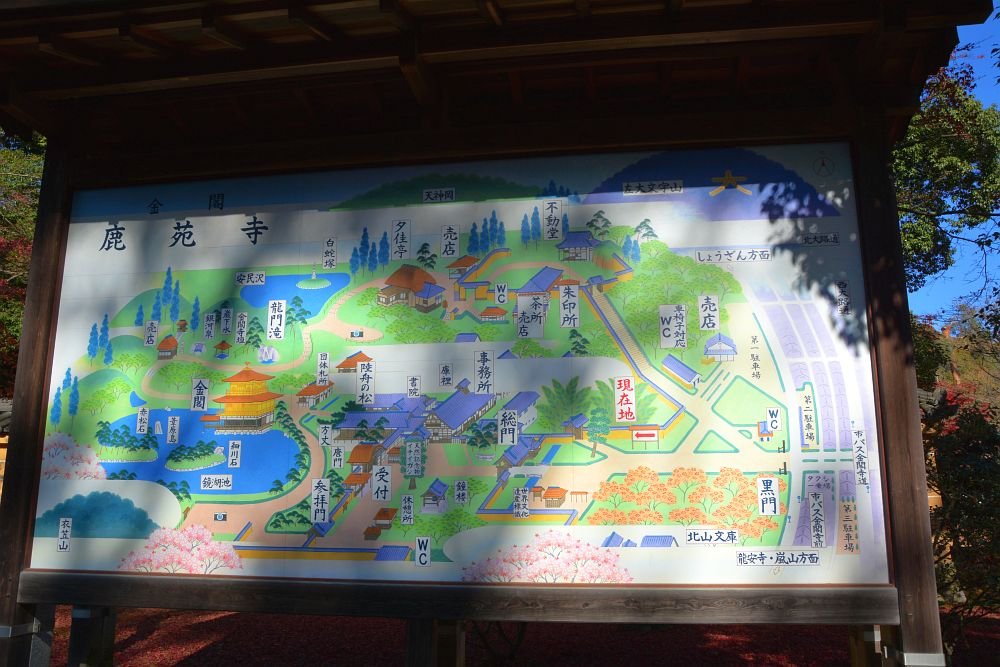
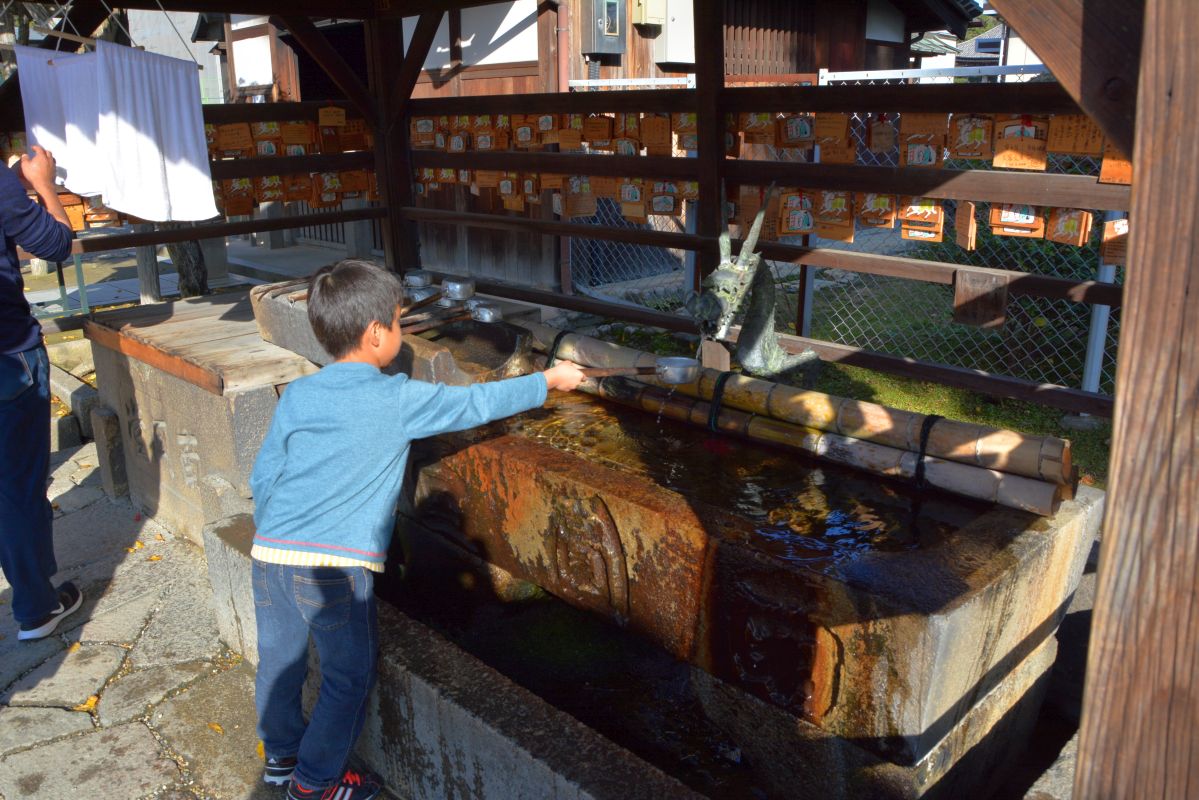
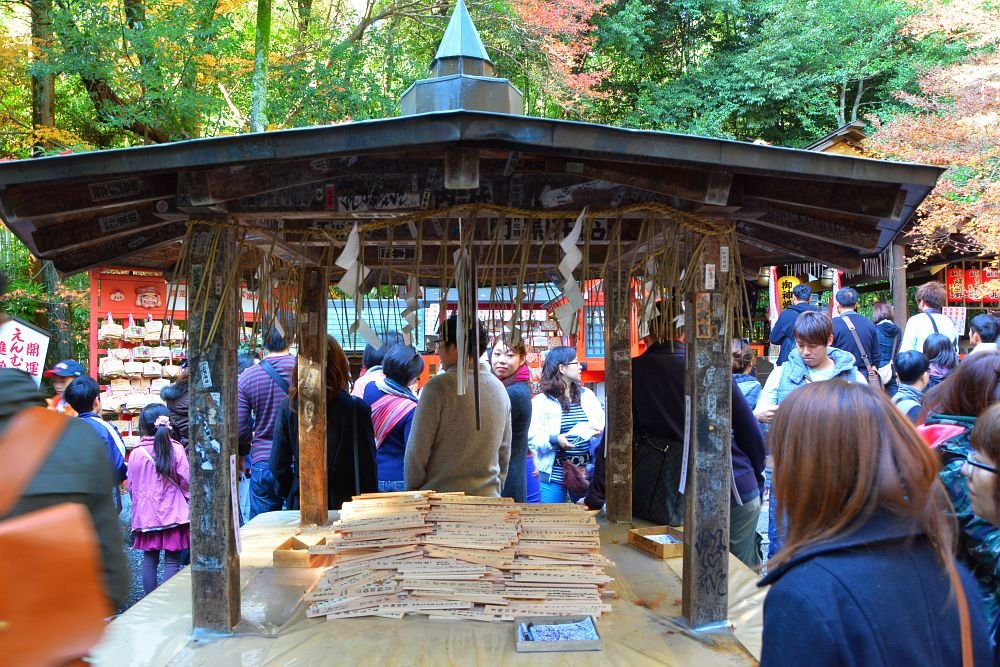
Write your wish in EMA places!
PRO TIP: FIND EMA PLACE AND WRITE YOUR WISHES!
Ema (絵馬) – the small wooden tablets used in Japan to write prayers or wishes, which are then hung up at shrines or temples.
The wooden plaques are often decorated with artwork, visitors write wishes or prayers for deities to read. I loved this Japanese tradition, mainly because it’s a chance to interact closely with local people.
Fushimi Inari – probably the most beautiful temple in Kyoto 😉
I suggest arriving at Fushimi Inari Shrine before the tour buses roll in is going to completely change the experience.
Note: This post may contain affiliate links, which are at absolutely no cost to you – I can earn a small commission on sales generated through this website and thanks to that I can share travel guides and inspirations that may help you reach your dream destinations and discover our unique world. I only recommend sites I actually use and have traveled to. Thank you for your support!