Bandia Reserve is a great and easily accessible destination from Dakar for a day trip. It’s 3500 hectares of fenced but natural habitat for many African animals. It’s an amazing experience which gives you a chance to get close to most of the African mammals and reptiles (excluding predators) and watch beautiful bird species.
I’ll share my experience and everything you need to plan your visit: what animals you’ll see, how the safari works, what it costs in 2026, the best time to go, and my honest answer to the question everyone asks: is Bandia a real safari?
Bandia Reserve Senegal Safari!
Bandia is a privately owned conservation park which takes good care of the animals and their reproduction.
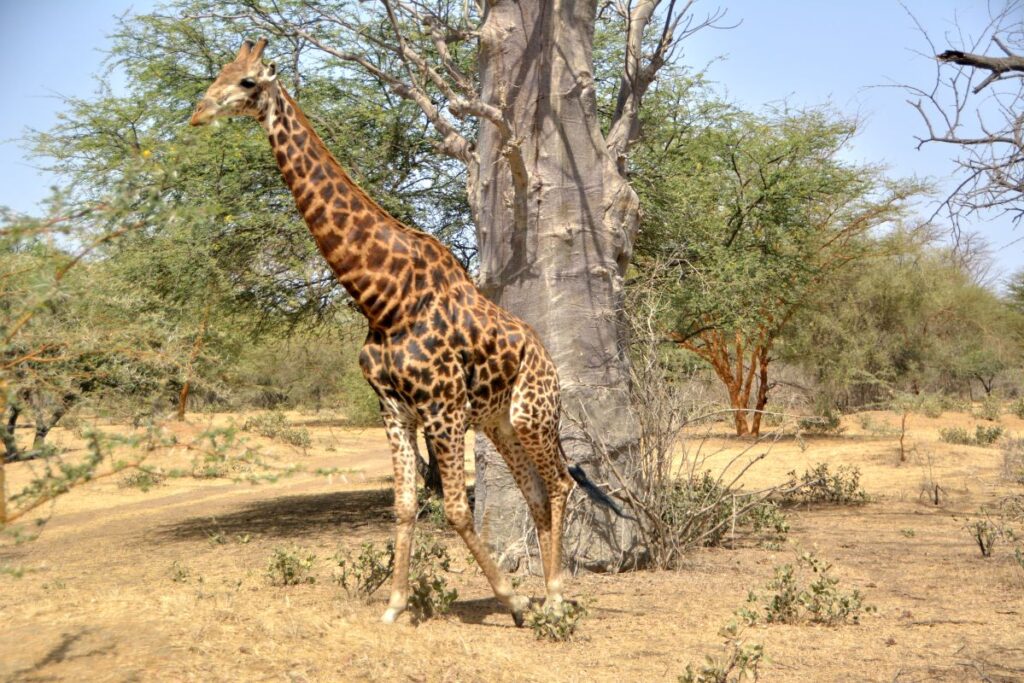
The reserve’s mission is to reintroduce animals that once lived in Senegal. Many of them had disappeared from the country, like the giraffe, so they had to be brought in from other countries. Many species were wiped out centuries ago by poaching and human pressure on the land. Today, the reserve gives them a protected home and gives visitors a rare chance to see African wildlife in West Africa.
Can you believe that all bird species have moved to Bandia Reserve naturally?
It’s also a beautiful landscape in its own right. The reserve is dotted with baobabs and acacias, and one of its most famous trees is a 1,000-year-old baobab with a trunk circumference of 17 metres.
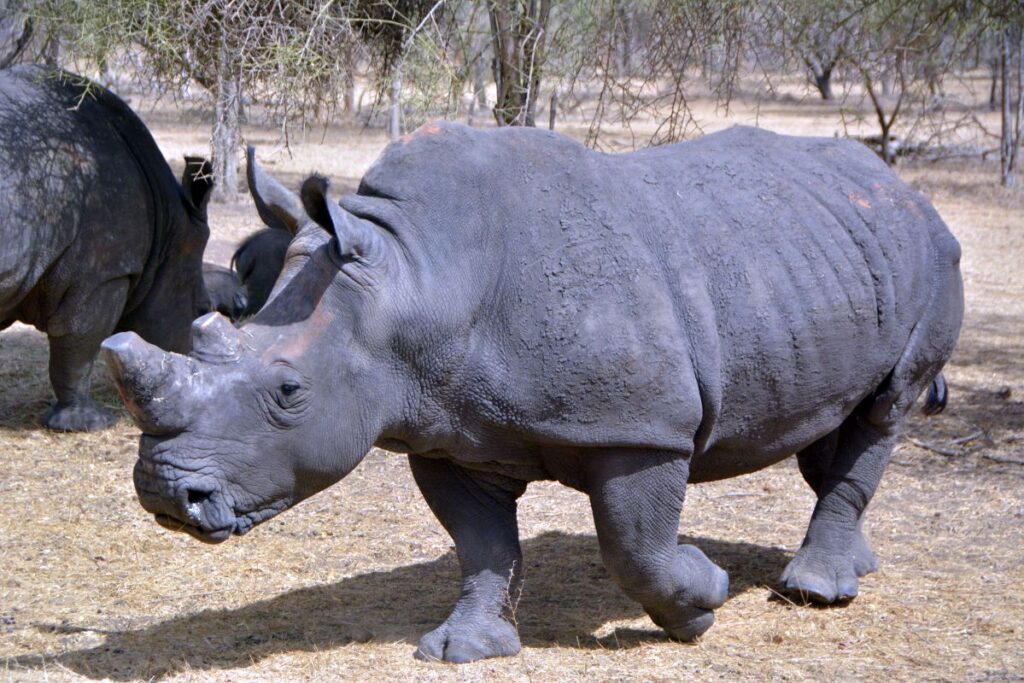
The reserve helps to protect some African wildlife like rhinos, some rare species of antelopes, giraffes and impalas – a medium-sized antelope. Most of the animals from Bandia National Park come from Senegal, but some were brought from South Africa.
| What it is | Senegal’s first private wildlife reserve |
| Size | About 3,500 hectares of savanna and open forest |
| Location | About 65 km from Dakar and 15 km from Saly |
| Signature animals | Giraffes and white rhinos |
| Predators? | No, there are no big cats in the park |
| Safari length | About 2 hours by guided 4×4 |
| Adult entry | 12,000 FCFA (about €19), as of August 2026 |
How to get to Bandia National Park?
The easiest way to get to Bandia National Park is to hire a taxi from Dakar (around 50 euros round trip), which will take you directly to Bandia Reserve and wait at the entrance for 1-3 hours until you complete your safari.
You don’t have to pay the taxi driver in advance!
Best time to visit Bandia Reserve in Senegal.
Season: You can visit year-round. The dry season (roughly November to June) is generally the best time for wildlife: the vegetation thins out, and animals gather around watering holes, which makes them easier to spot. The rainy season (roughly July to October) makes the landscape green and beautiful, but the bush is thicker and the tracks can be muddy.
Time of day: Go early morning or late afternoon. The animals are more active, the light is softer for photography, and you’ll avoid the midday heat. By late morning in the dry season, the savanna gets very hot and many animals rest in the shade.
What animals can you see at Bandia?
The two stars are giraffes and rhinos, and seeing them was the highlight of my safari. I love nature and wildlife, so for me this safari was an incredible adventure.
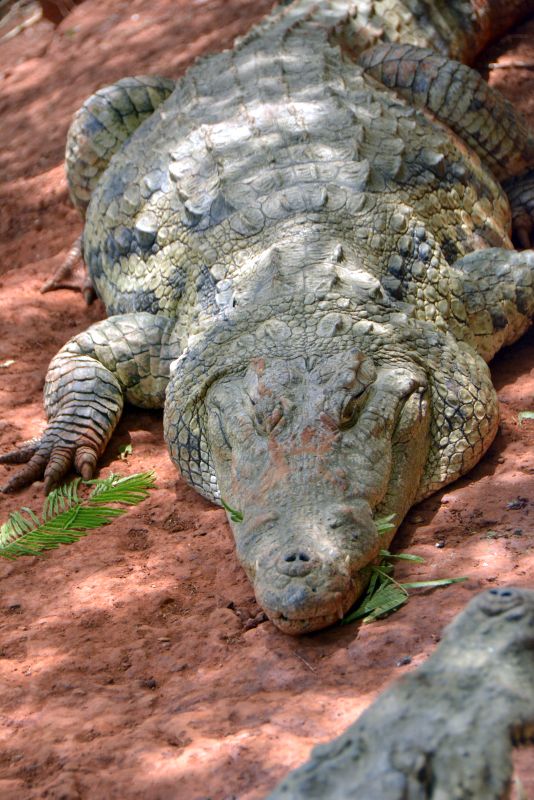
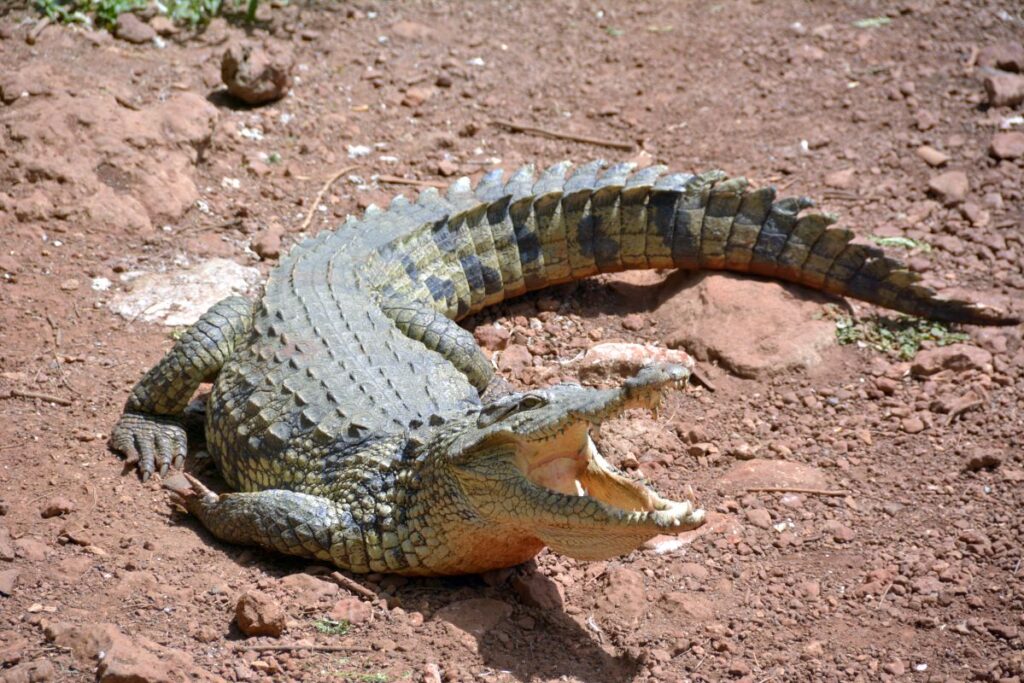
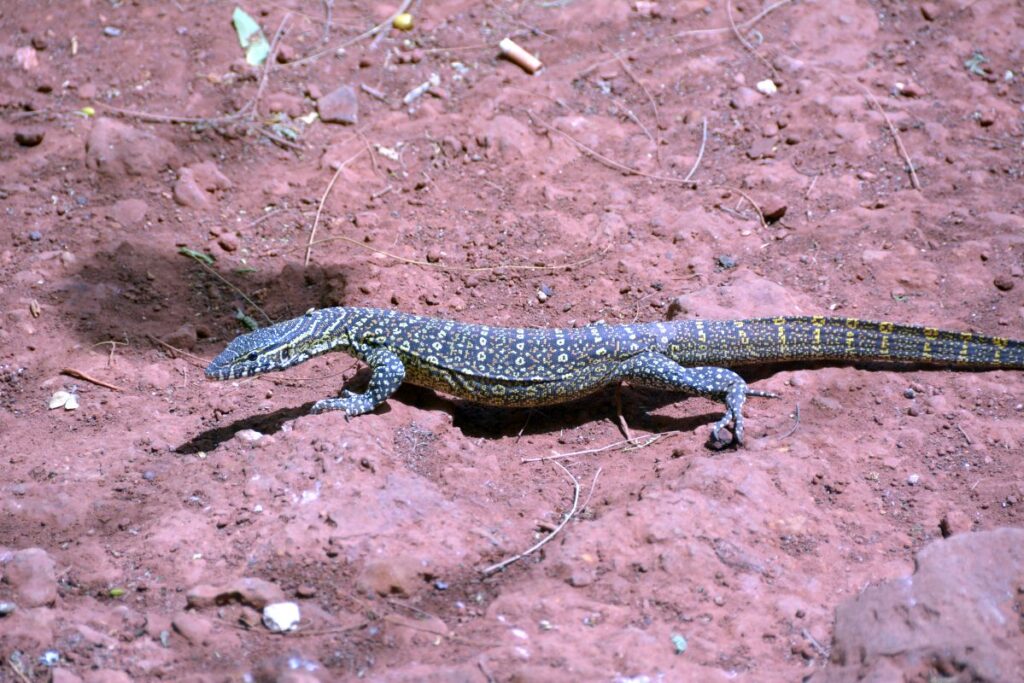
Beyond those, the list is long. You can see most of Africa’s best-known animals except the big carnivores. Species include white rhinos, zebras, giraffes and buffaloes; several antelopes, including the giant (Derby) eland, Cape eland, oryx, roan antelope, waterbuck, kob, greater kudu, nyala and impala; gazelles; warthogs; patas and green vervet monkeys; jackals, mongooses, crocodiles, giant tortoises, and ostriches.
Birdwatchers, bring your binoculars. The reserve is home to more than 120 bird species, including eagles, herons and vultures.
What you won’t see: lions, leopards, cheetahs or elephants. Bandia has no predators. That’s what makes it safe to drive among the animals so easily, but it also shapes the experience, which I’ll come back to below.
A fun detail: When you enter the reserve, the first animals you meet are the ostriches. Guides joke that they’re the reserve’s security guards, because they make loud noises when intruders approach.
How the Bandia safari works
You don’t drive yourself around Bandia. Visitors explore in a 4×4 with a guide, which keeps both the animals and the visitors safe and makes wildlife easier to find.
A typical visit follows this pattern:
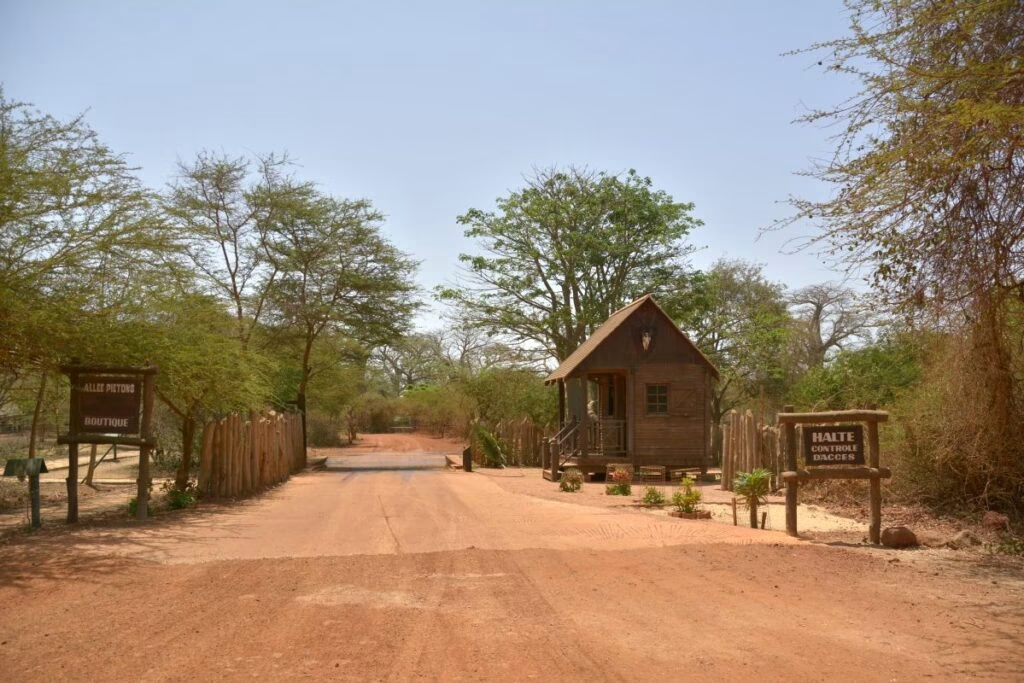
- Arrive at the entrance on the main road, pay for your ticket, and arrange a vehicle and guide if they aren’t already included in your tour.
- Board the safari vehicle, usually an open-sided 4×4 truck.
- Set out on a roughly 2-hour guided drive on the reserve’s marked tracks, stopping for animals, baobabs and watering holes. The pace depends on the guide, who shares stories and facts about each species you meet.
- Finish at the entrance, where you can have a drink or lunch.
Departures usually run morning and afternoon; one operator recommends 7:30 am or 2 pm.
Entry fee to Bandia Reserve.
Entry fee to Bandia Reserve Senegal:
- Adults: 12 000 F/€19
- Children until 12 years old: 7 000 F
- Safari 4WD jeep rental with up to 11 seats: 40 000 F/you can wait for more tourists to share the jeep, although we visited the park in low season and enjoyed exploring the area only the two of us.
- Tour Guide: 6 500 F/you have to hire a guide along with a jeep.
All tourists entering the park are always accompanied by one of the local professional tour guides. They are highly experienced and have a great knowledge of the reserve’s history and tracking the animals.
Top 3 recommended, top-rated tours to Bandia Reserve | Tripadvisor:
| Option | Typical cost | Best for |
|---|---|---|
| Independent visit (taxi + entry + shared 4×4) | Lowest | Budget travellers staying on the Petite Côte |
| Organised shared tour | About €45–80 | Convenience, no negotiating |
| Private tour with pickup from Dakar | $200+ | Families, photographers, tight schedules |
Serere people in Bandia Reserve Senegal.
Red soil and sand spreading across the park is a very typical picture of the African savanna. Serere people – it’s a local tribe that used to inhabit the Bandia Park area.
Nowadays, Serere people live mostly in western Senegal and Gambia and speak the Serer language. You will hear the whole story while in a park and visit one of the baobabs that was used as a ceremonial and cemetery site by the Serere people (bones are remaining under the tree).
Serer believe that for the baobab to become a tomb, it cannot be inhabited by any spirits.
Where to eat in Bandia National Park?
There are few nice restaurants near the entrance of the park, with plenty of crocodiles in the surrounding waters. There are also a few shops with local souvenirs. Please remember that only we can support the wildlife and help species to survive. We can easily contribute to avoiding treating animals or humans in the wrong way, so it would be great to remember:
- Never buy souvenirs made of animal parts
- We all live in Instagram times but please avoid photos with wild animals (especialy lions, crocodiles), as they are being heavily drugged and abused not to be aggressive toward tourists
- Avoid places and activities if the ethics is doubtful
- Avoid zoos, circuses, and paid photos
- Don’t ever feed the animals – it is also a danger to yourself!
Note: This post may contain affiliate links, which are at absolutely no cost to you – I can earn a small commission on sales generated through this website and thanks to that I can share travel guides and inspirations that may help you reach your dream destinations and discover our unique world. I only recommend sites I actually use and have traveled to. Thank you for your support!