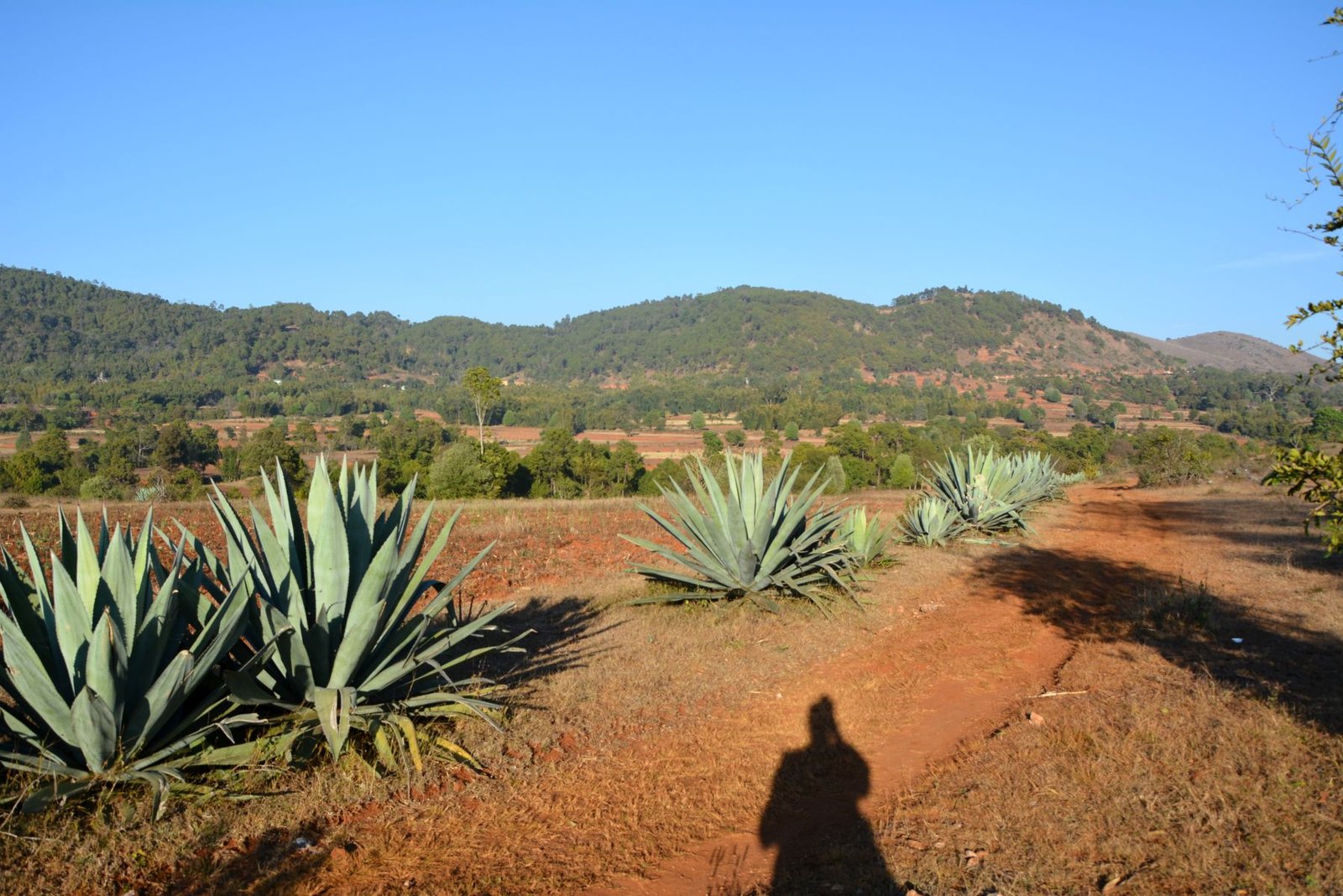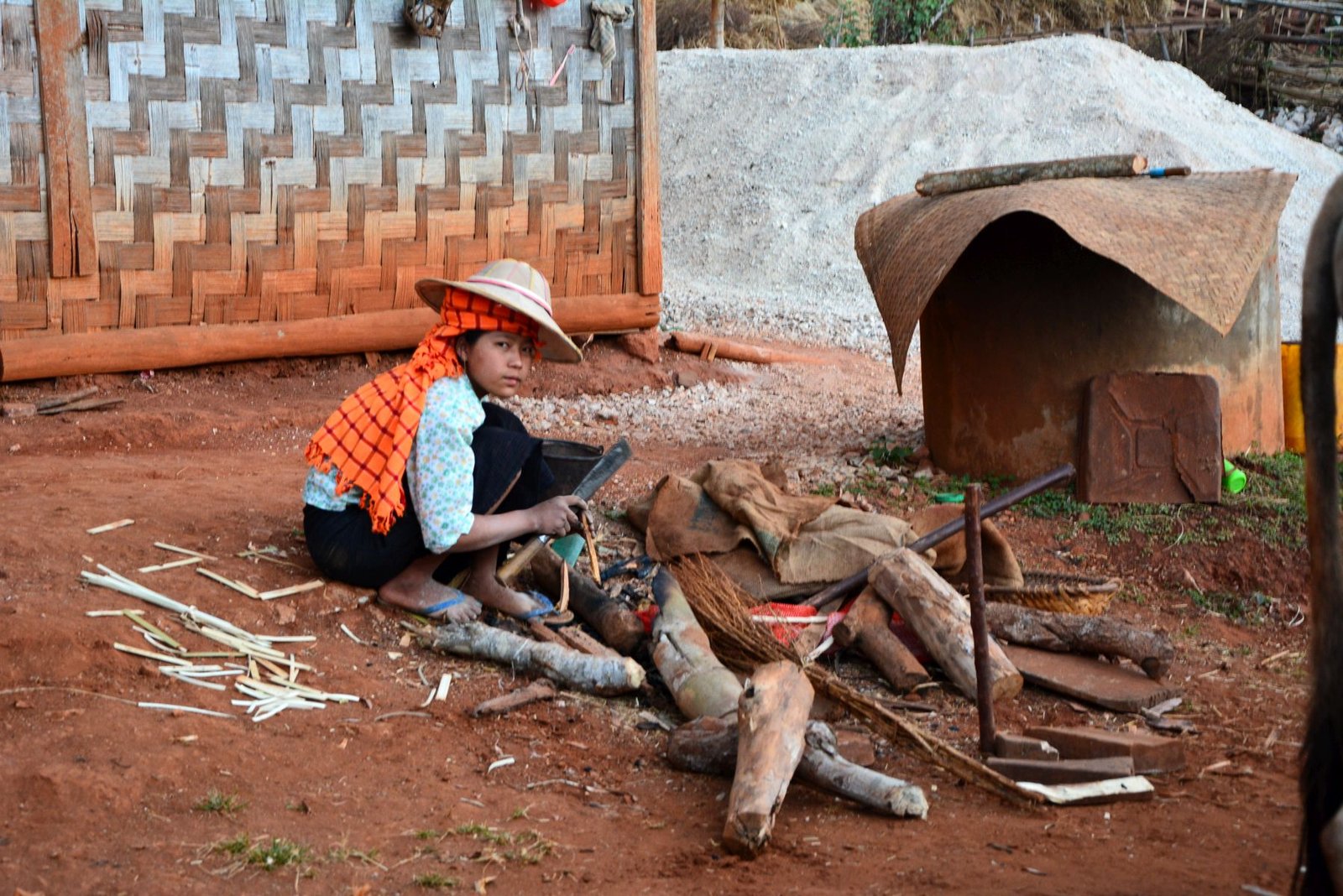
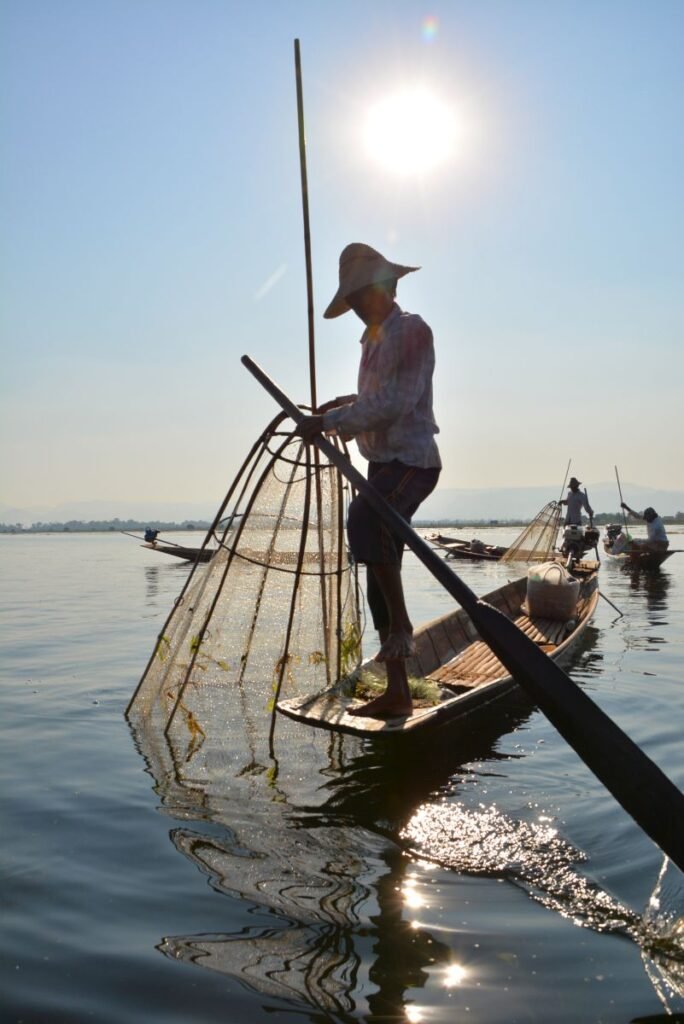
Trekking from Inle Lake to Kalaw was one of the best things I’ve done in Myanmar. My friends told me about the trek long before I visited Myanmar. The hiking route leads through beautiful, natural scenery, allowing you to experience true Burmese pictures, without a single tourist.
Trekking from Inle Lake to Kalaw.
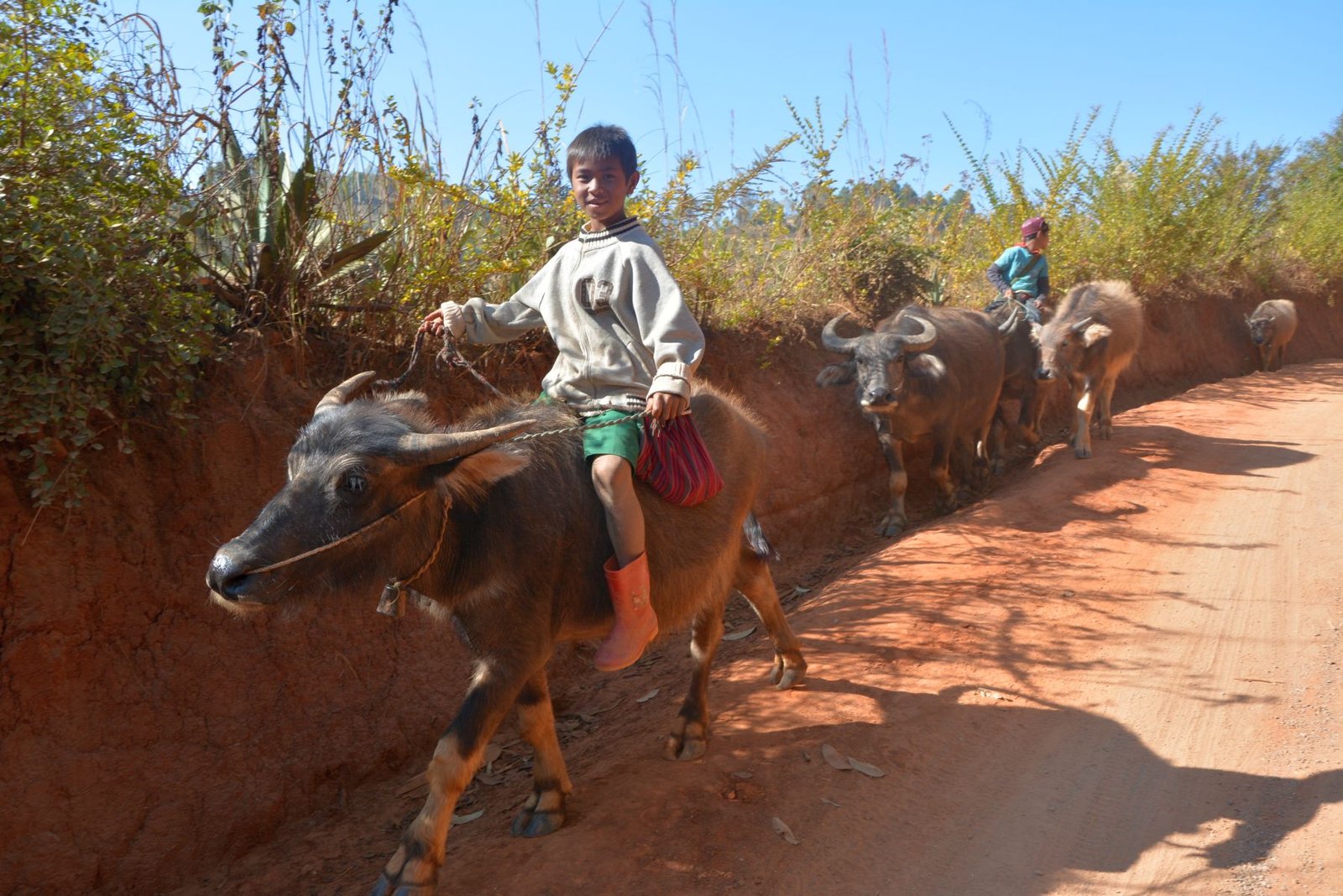
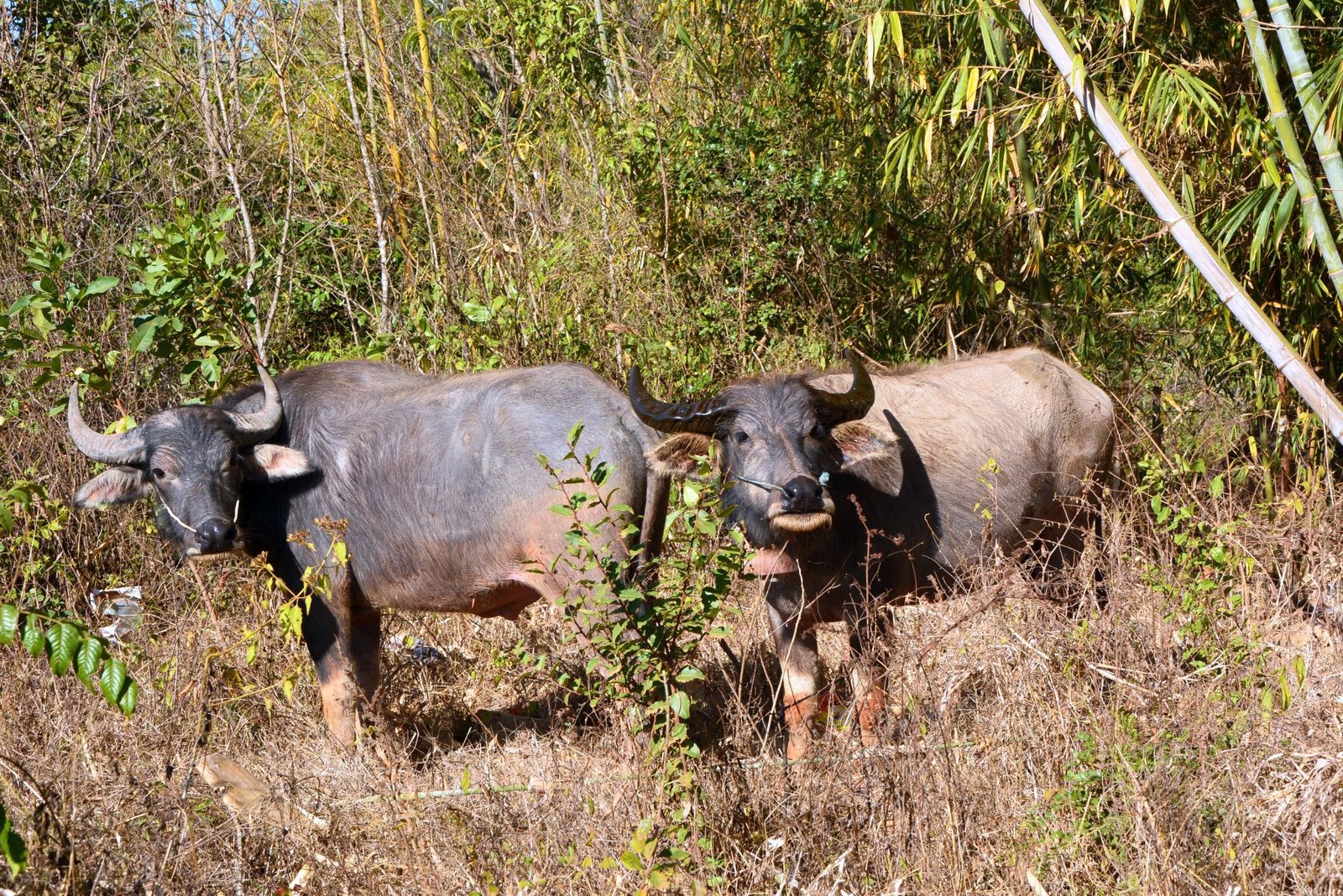
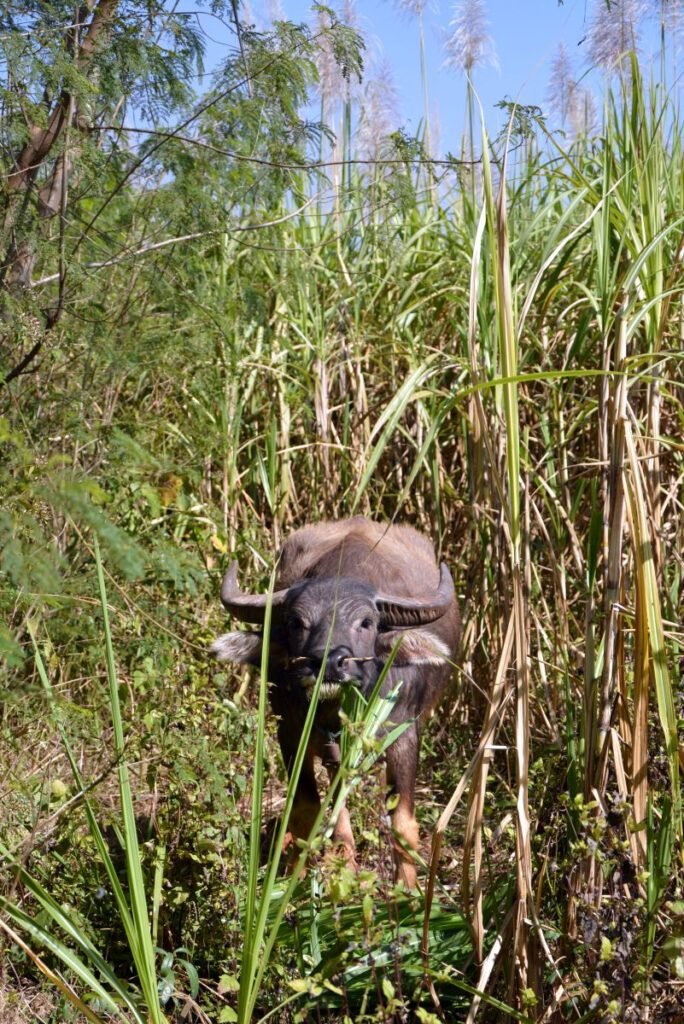
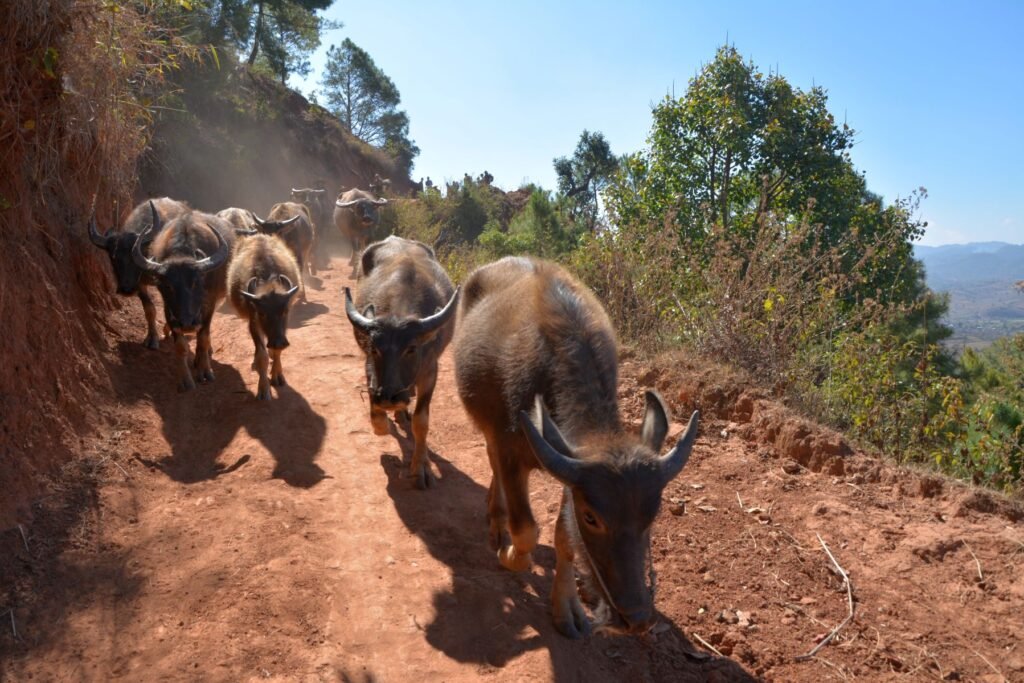
There are three different trekking routes between Inle Lake and Kalaw. During the first day, we have 7 hours of hiking, including an hour lunch break. By the way, the local food was one of the best I had in Asia. In the beginning we walked through the bamboo wood and saw many buffaloes lazily submerged in a river /my favourite animals in Asia!/.
3-day trekking to Kalaw.
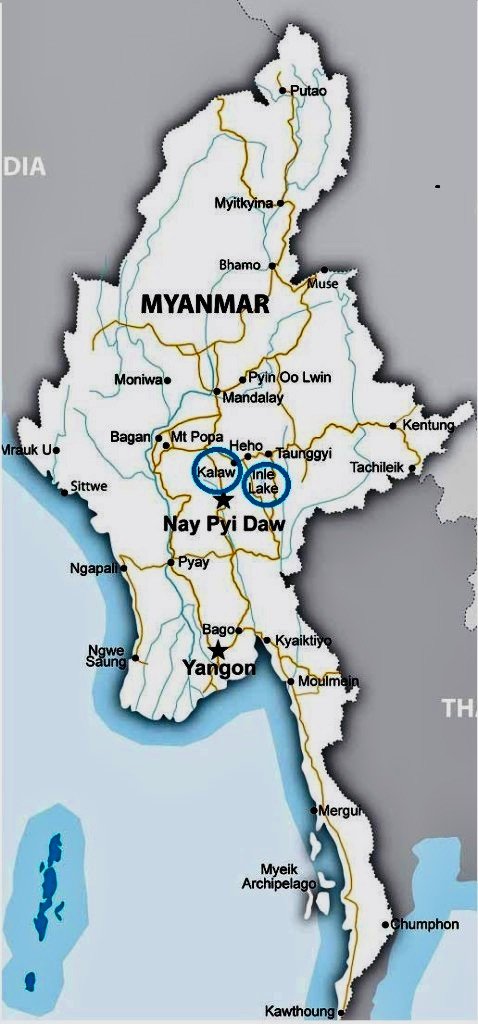
- Three-day trekking from Inle Lake to Kalaw is only 43 km to walk (see the map).
- It is quite challenging to find a 3-day tour from Inle Lake to Kalaw but it’s doable. I asked in a few places and finally arranged a 3-day trekking from Inle Lake to Kalaw for 2 people.
- Starting from a short boat trip on Inle Lake, we visited a few floating villages to witness daily lives of local inhabitants. The first hour was deceptively pleasant. The trail meandered through agricultural land where farmers tended crops in the cool morning air. Water buffalo eyes tracking us with lazy indifference. Children playing in front of wooden houses would freeze mid-game to stare at us.
- Most people do the trek from Kalaw to Inle Lake, which is a much more popular route but also more expensive.
- Treks are run year-round but the best trekking time runs from October to January.
Trekking options.
I strongly recommend the 3-day trekking from Inle Lake to Kalaw. There is also an option for a 2-day trek with 1 night. A few years ago, it was quite difficult to find an English-speaking guide. That’s why it is required to start planning a few days ahead of the trek. The price for a 3-day trek should not exceed $170 for a private tour. This includes the guide, accommodation, meals and water along the way.
I have been backpacking in Asia for 6 months at that time and I have to say the Myanmar people were one of the friendliest I’ve met. Every village we passed was so quiet, with life happening slowly in line with nature.
In the evening, we reached our village, where we slept in one of the local family houses. The place was charming.
The monastery was located in the central part of the village. We took a walk in the evening, watching local people wrapping work before dusk. In the village, we met some other trekkers, doing the trek the opposite way from Kalaw to to Inle lake.
We were ushered into a single room with woven bamboo floors and invited to sit on low stools around a wooden table that had been polished smooth by years of use. Within minutes, the table groaned under the weight of food: steaming rice, a curry thick with potatoes and chicken, stir-fried greens, crispy fried noodles, and a soup fragrant with lemongrass and ginger. The food was incredible!
Day-2 trekking from Inle Lake to Kalaw.
Day two was longer. More challenging. More spectacular.
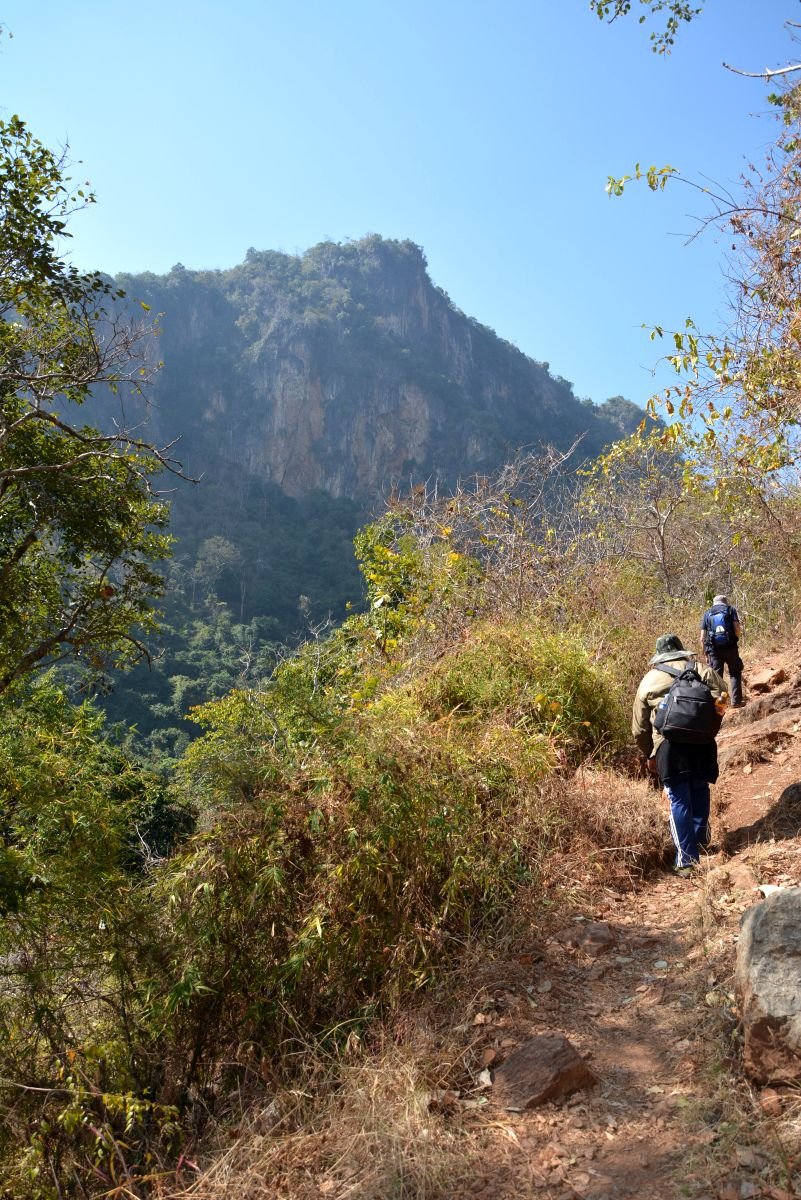
The trail climbed higher into the Shan Hills, offering amazing views
We walked through pine forests and across bamboo bridges.
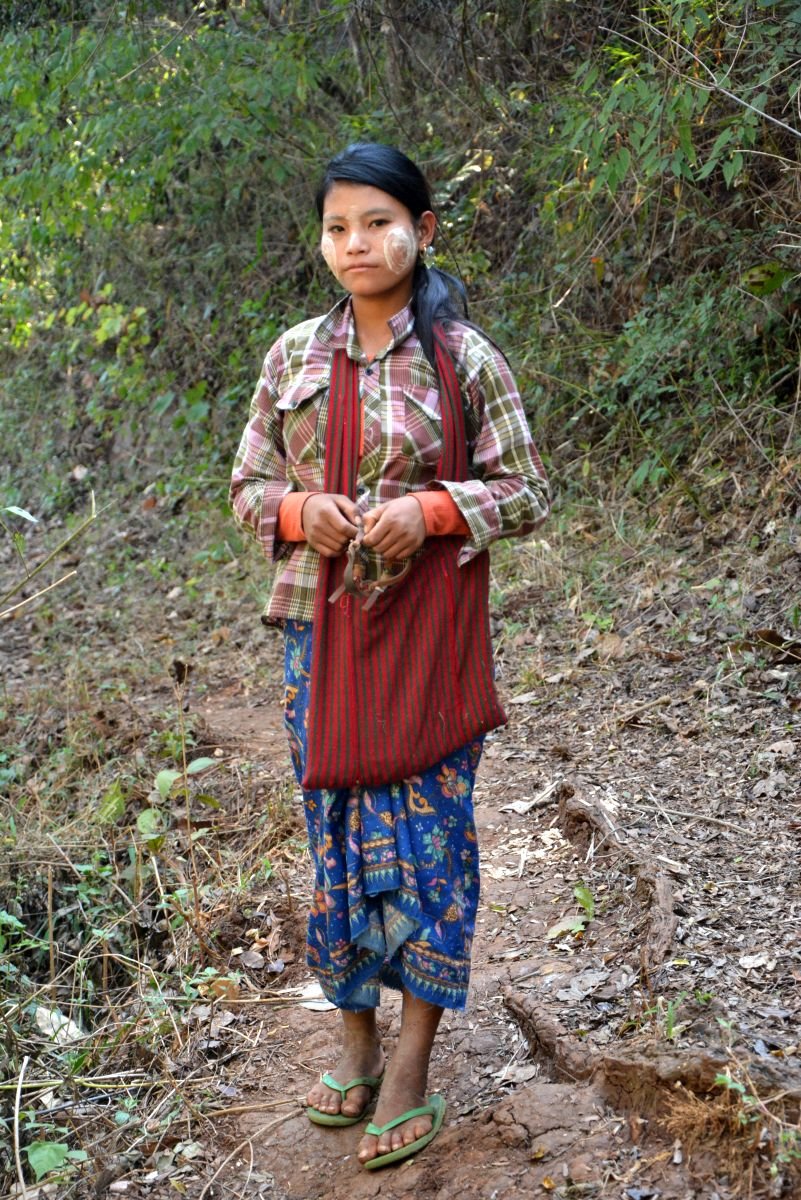
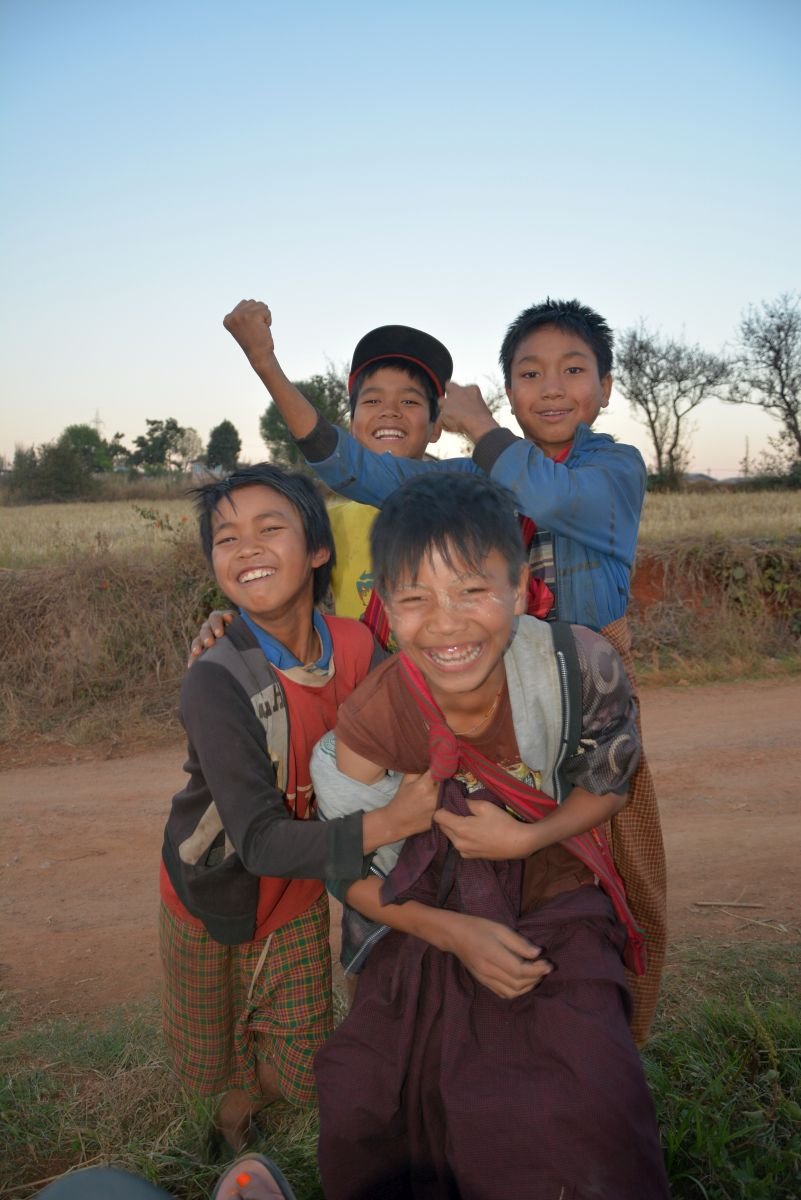
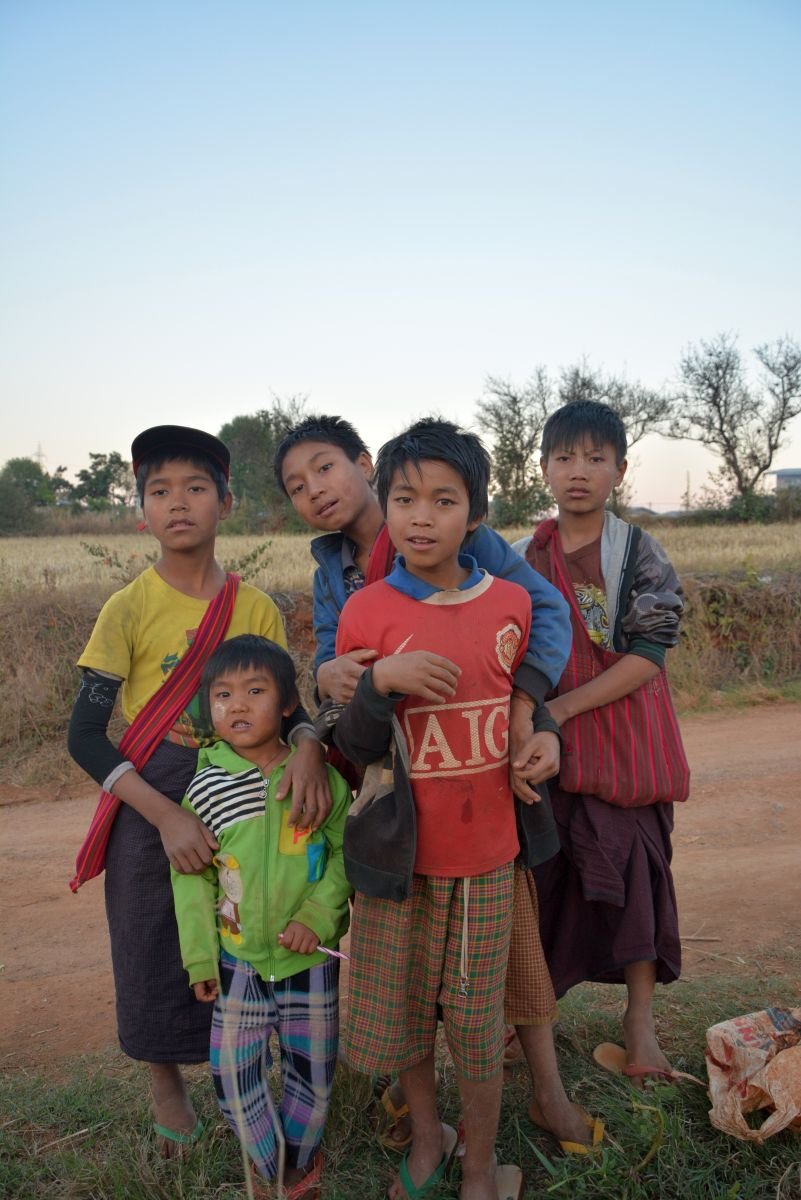
The kids were my favourite part of each day 😉 It was surprising how eager they were to stand in front of my lens.
Day 3 -the final push to Kalaw.
The final day brought different challenges. I don’t know why, but listers had formed on my feet. The straps of my backpack had found new and creative ways to dig into my shoulders.
After three days in quiet villages surrounded by a peaceful nature, Kalaw looked almost metropolitan.
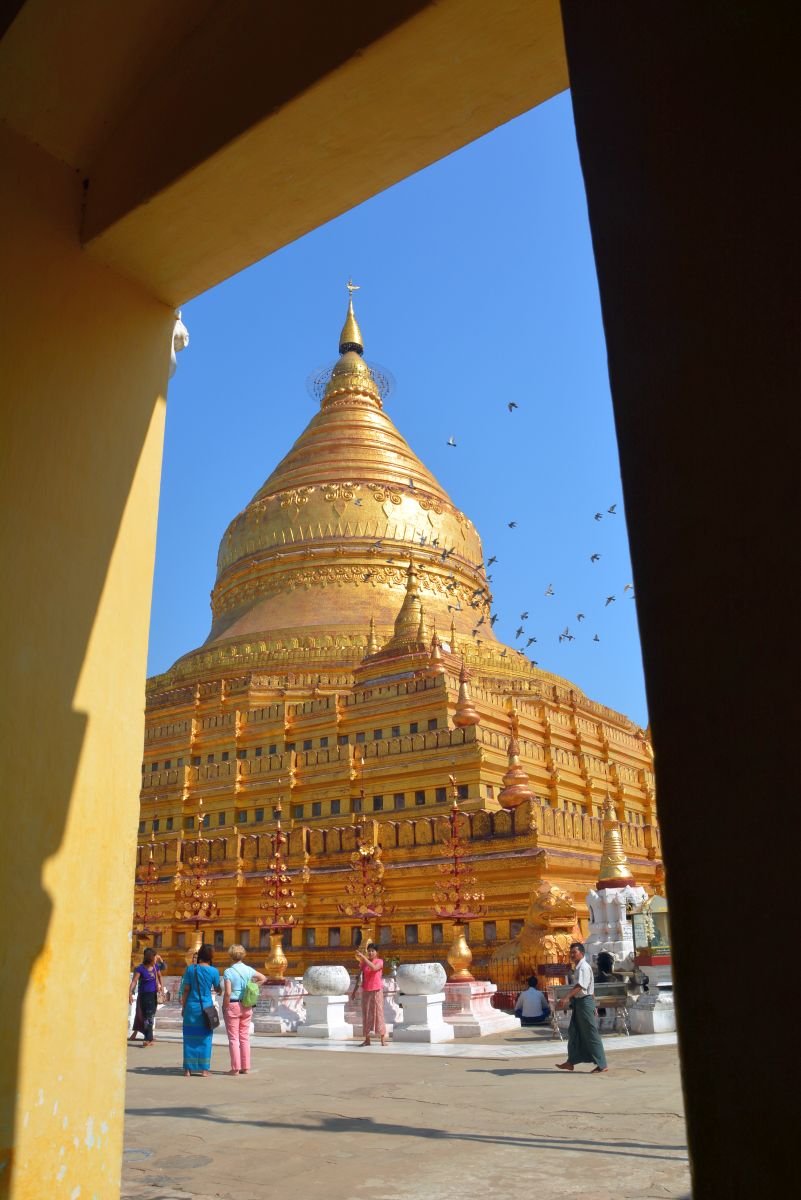
But the temples are magnificent!
Tips for trekking from Inle Lake to Kalaw.
Go with a guide. Yes, you could theoretically do it alone, but you’d miss the context, the village connections, and the cultural insights that transform a hike into an experience. Local guides know which families host trekkers, which trails are safe, and how to navigate the complex web of languages and customs that make Myanmar so fascinating.
Pack light, but pack smart. Layers are essential—mornings are cold, afternoons are hot, and mountains are unpredictable. Good hiking boots are non-negotiable unless you enjoy blisters. Bring more socks than you think you need. A headlamp matters for monastery bathrooms at night. And for the love of all that’s holy, bring your own toilet paper.
Wear hiking shoes!
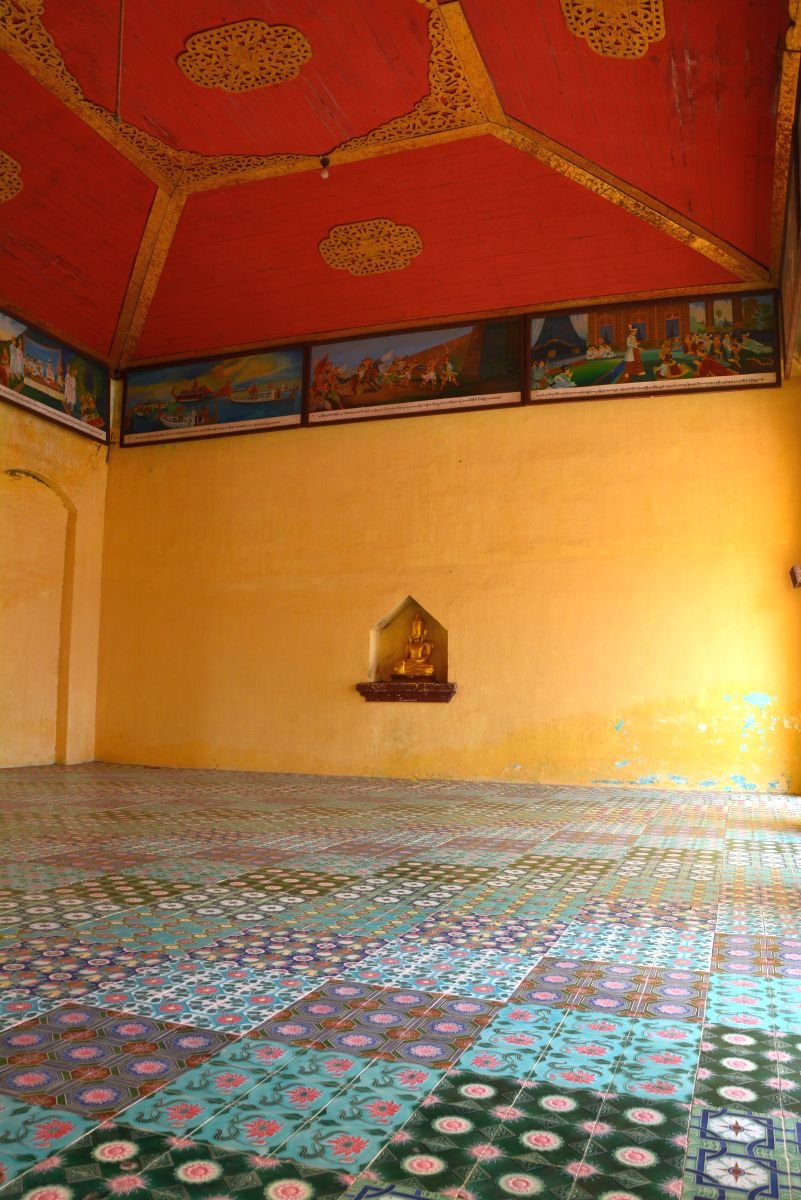
Embrace the monastery stays. They’re not comfortable by Western standards, but they’re authentic and humbling. Respect the space, dress modestly, and don’t expect amenities. This is part of the experience.
Bring small gifts. Pens and notebooks for kids, nice soap or cosmetics for host families. These aren’t payments—they’re gestures of gratitude that go a long way.
Be flexible. Trails change, weather happens, and plans shift. The magic of this trek lies partly in its unpredictability. Embrace it.
Take the time to connect. Don’t just walk through villages—pause, play with kids, accept tea when it’s offered, learn a few Burmese phrases. These moments matter more than the miles.
Chewing betel.
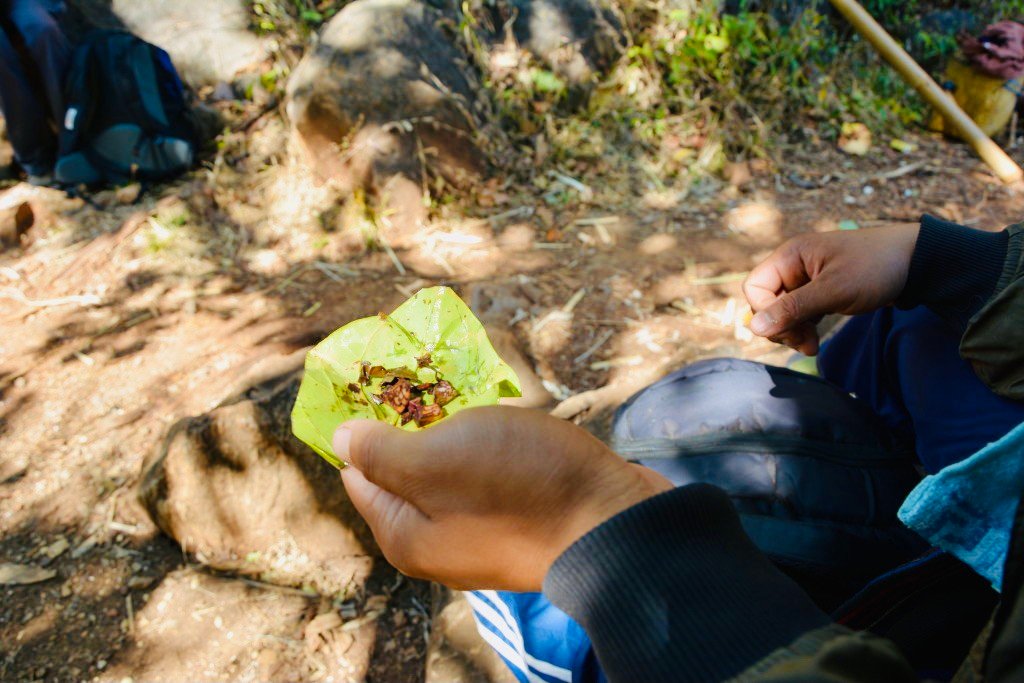
Our guide had a bloody smile. I decided to try betel, a commonly chewed thing in Myanmar. They put sliced betel nuts, lemon juice and some tobacco in a piper leaf. Many people have stuffed all their mouths with those leaves. Sometimes they can barely talk  Only spit all the time. It was very delicious but a little spicy. You’re supposed to delicately chew it and never swallow the saliva.
The chemical reaction between betel and saliva makes your mouth bloody. The teeth are stained a reddish-black, dyed from years of chewing betel. Not after a few tries of course so I can chew with impunity, although it’s hard to breathe and hike. During the night the temperature drops to 4-5 degrees, it’s really cold but they give us warm blankets. The cat chooses my floor bed, so I have additional heat.
When to trek from Inle Lake to Kalaw?
There are only three seasons in Myanmar. It’s winter now in February, maybe that’s why the fluctuations of temperature between the day and night are so big.
Summer in Myanmar starts from March when temperatures increase up to 40 degrees. Locals intensively work in fields at this time using coaches with mountain cows, to do as much as possible before the heat season start prceding slippy roads and muddy fields when the rainfalls flood the area in wet season. On the third day we finally reach Kalaw. This is very nice city but I guess it’s enough to stay for one day.
Trekking in Myanmar.
A week after finishing the trek, I found myself in Yangon’s chaotic streets.
Myanmar has changed since I was there—politically, economically, in ways both visible and invisible. I don’t know what the future holds for this beautiful, complicated country. But I know that in Myanmar I did few exceptional trekkings: from Inle Lake to Kalaw, Hsipaw hiking, exploring Bagan, and these were some of the best in South-east Asia.
READ ALSO:
The best things to do in Hsipaw, Myanmar (at the foot of the Himalayas).
Note: This post may contain affiliate links, which are at absolutely no cost to you – I can earn a small commission on sales generated through this website and thanks to that I can share travel guides and inspirations that may help you reach your dream destinations and discover our unique world. I only recommend sites I actually use and have traveled to. Thank you for your support!