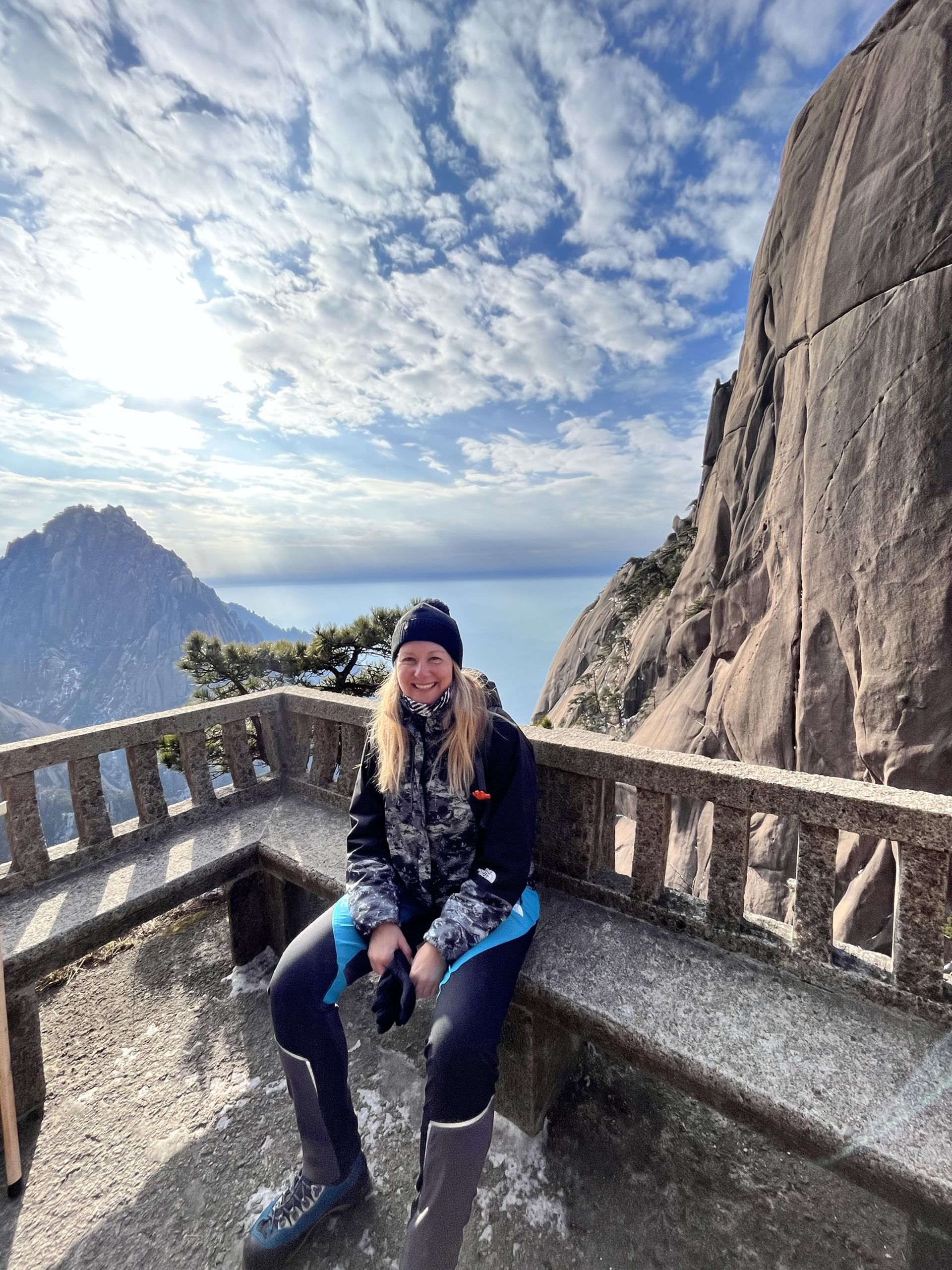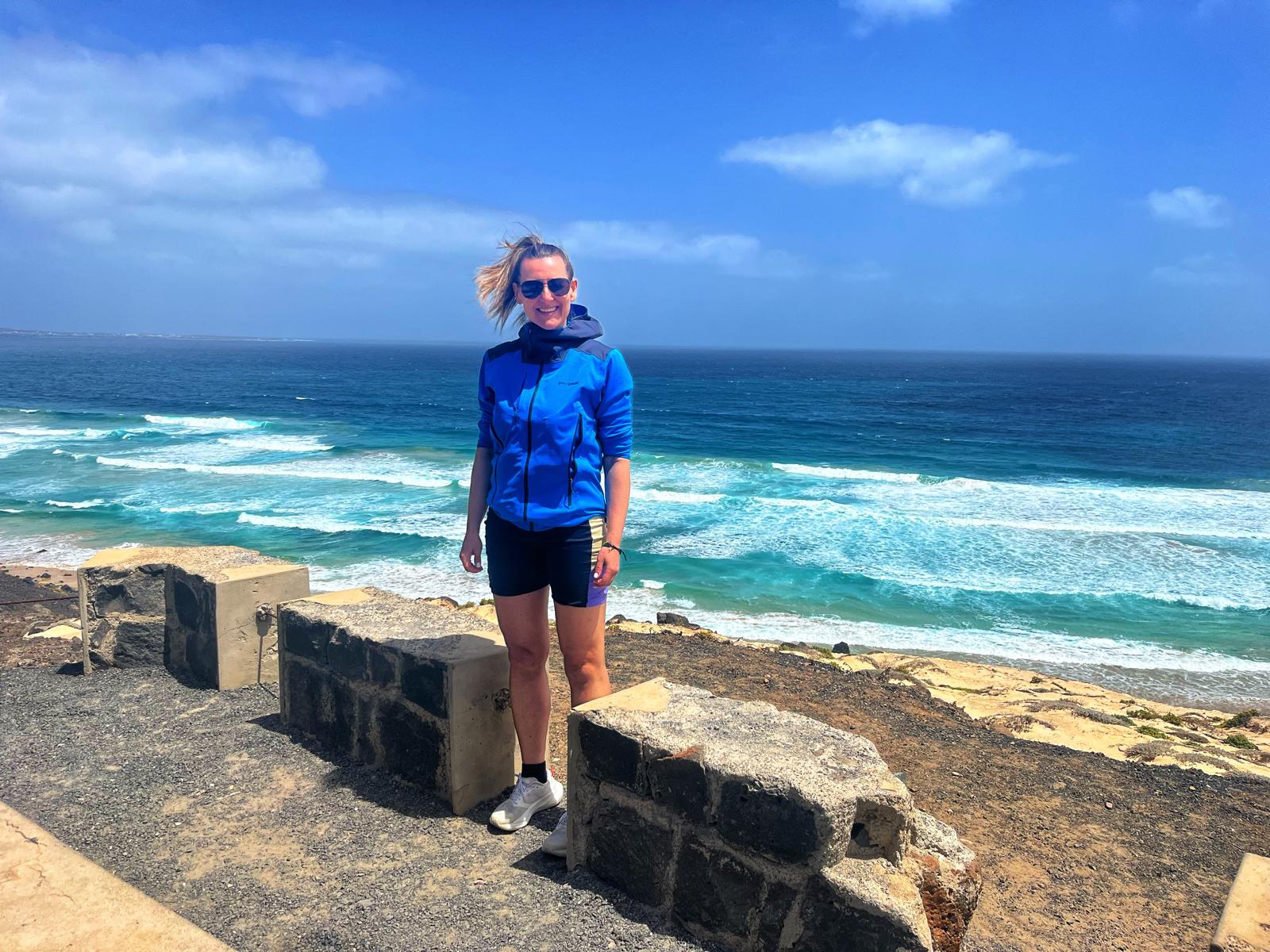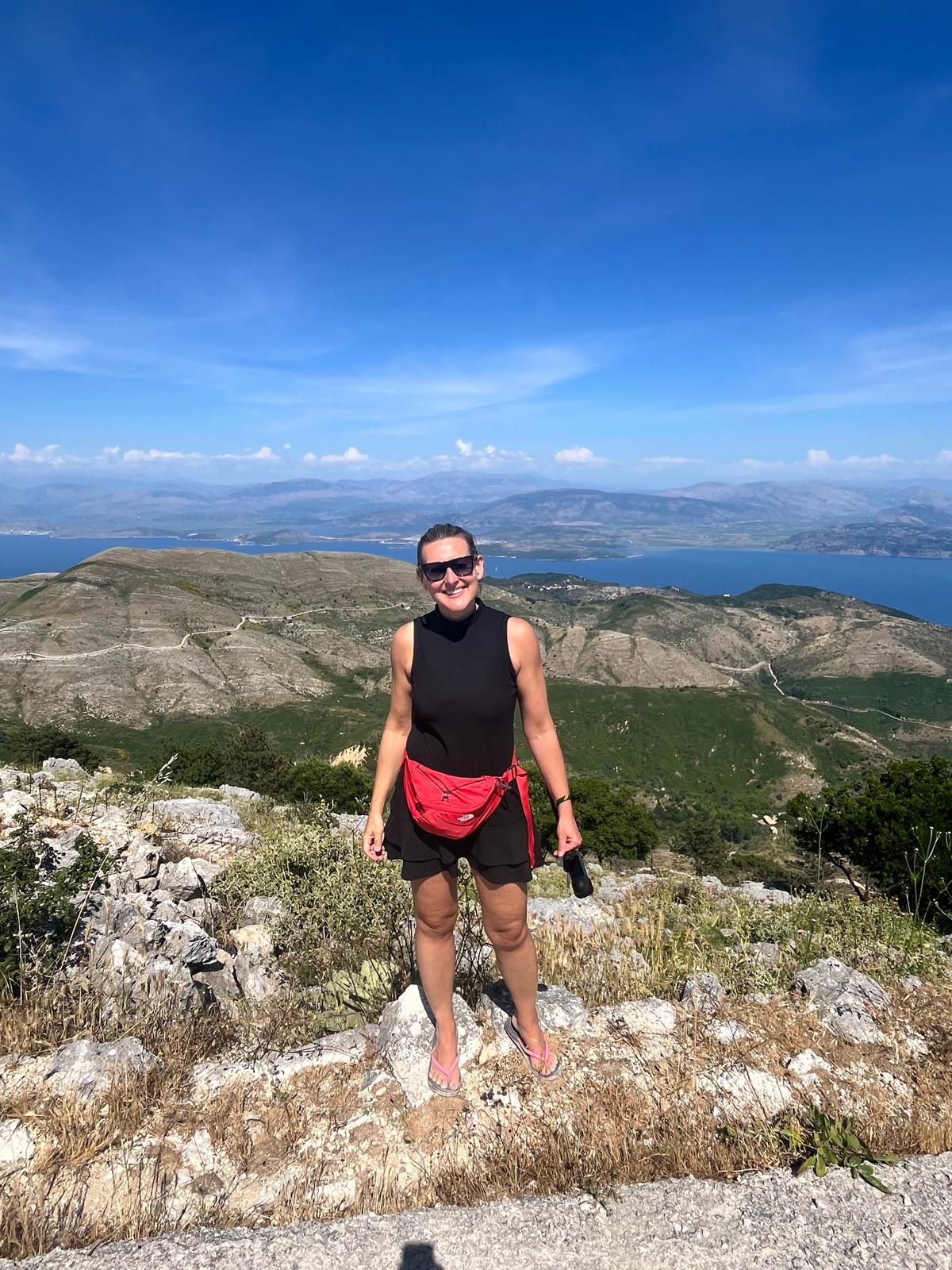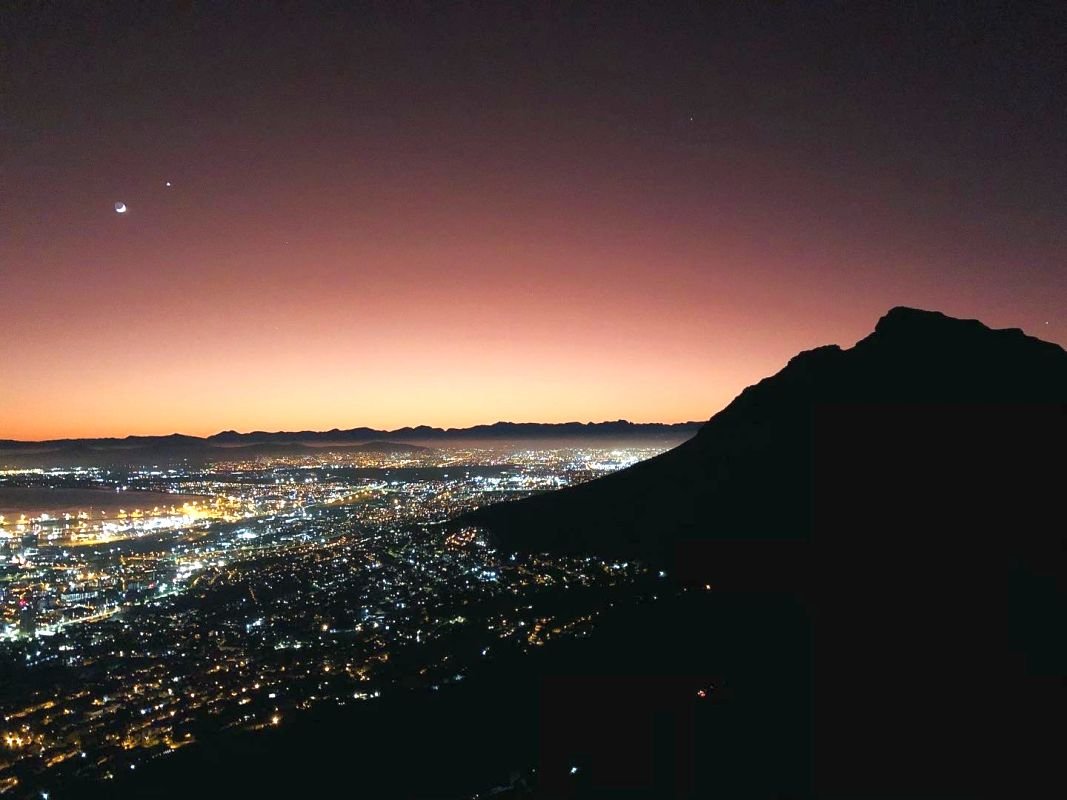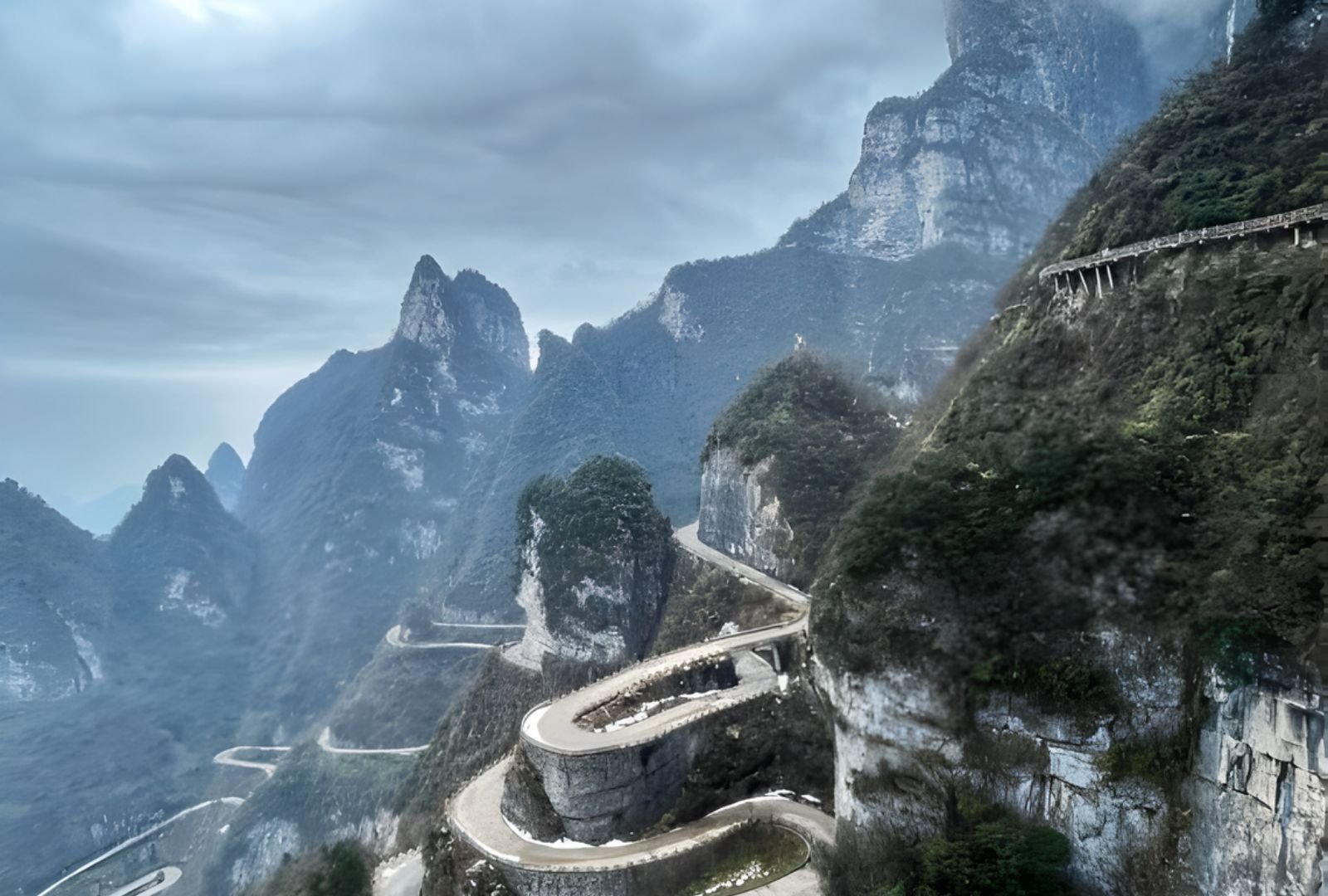
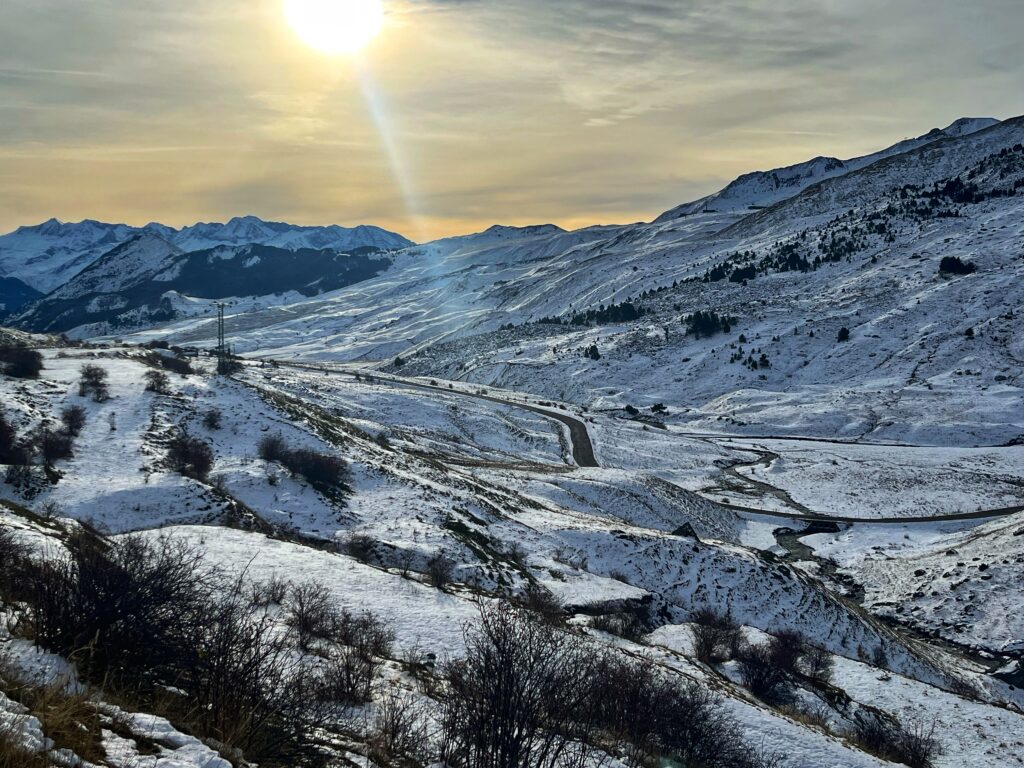
The Pyrenees landscape, shaped by dramatic snowy peaks, deep valleys, and winding mountain roads, is truly breathtaking! My priority for this trip was obviously mountaineering, but from the moment I stepped into the Pyrenees National Park, I figured I must travel the most scenic road in the Pyrenees from Spain to France via Col du Pourtalet.
The road from Huesca over the Col du Portalet to Lourdes was magnificent. In one trip you go from the plains of Aragon at 488 m to the most beautiful train station in Spain at Canfranc, past Spain’s oldest ski resort at Candanchú, up through the turquoise reservoirs of the Tena Valley to a 1,794 m pass facing the giant tooth of the Pic du Midi d’Ossau, and down through France’s green Ossau Valley to the pilgrimage town of Lourdes.
My scenic road in the Pyrenees from Spain to France.
There are more than 20 border crossings between France and Spain, but the one through the Col du Pourtalet is a highly spectacular mountain road. I drove from Huesca (Spain) to Lourdes (France); 175 kilometres takes 3 hours, but trust me, it’s well worth it.
It starts with an amazing view of the snowy Pyrenees cordillera spreading for almost 500 kilometres along the Spanish-French border.
MY ROUTE: Huesca (488m) – Canfranc (the most beautiful train station in Spain) – Candanchú (1530m), a famous ski resort in Huesca, Aragon, Western Pyrenees – Col du Pourtalet (on the border) – Ossau Valley in French Pyrénées – Laruns Village – Lourdes (Sanctuaire de Notre-Dame de Lourdes).
How to get a cheap but good car rental in Spain?
I rented my car as usual on RENTALCARS.COM, the world’s largest online car rental service, comparing offers from the majority of rental companies. By selecting your preferences, you can get the best deal on your desired car category. I chose Drivalia this time, and I have to say the service was top-class! From the shuttle van from the airport to the rental office, smooth pick-up and drop-off.
All rental conditions were clearly communicated and explained in detail. Really fabulous. I had a car for a week – went to France and around Aragon state without detecting any problems. I also had full coverage purchased on Rentalcars.com.
IMPORTANT NOTE: There are two countries you are allowed to drive to: France and Andorra. You need to communicate this while collecting the car and purchase extra insurance of Euro 20/per each trip. However, the minimum payment is Euro 40, so even if you plan only one trip, report two. You need to specify your plans for trips abroad; otherwise, GPS will detect the car crossing the border, and you will be fined.
What is the highest peak of Pyrenees?
The highest peak of Pyrenees is Pic Aneto 3404m, located in the Massif de la Maladeta in Huesca Province in Spain.
Pyrenees cordillera: 500 km
Most spectacular Park: Ordesa National Park
Highest peak: Aneto – 3404m.
It takes 2 days to climb Aneto Glacier (1-day for very experienced climbers). At the very top you’ll feel much safer with a rope support. Aneto peak can be climbed all year round but the easiest trail would occur in summer months.
Driving through Aragon Province in Spain.
Magnificent Gallego River running along the main road is famous for exciting rafting expeditions. The river flows into Embalse de Bubal phenomenal emerald colour lake. There are few viewing points on the way, where you can park safely and take some pictures.
Sallent de Gallego – spectacular village located at the bottom of powerful mountain peaks. With number of good hotels and accommodation options, the place is a great gateaway for skiing and hiking adventures. It also has gorgeous Gothic church from the beginning of the 16th century. This stage of the trip definitely deserves to be called the most scenic road in the Pyrenees.
Why this is the most scenic road across the Pyrenees?
- Two completely different worlds in one drive: sunny, rocky Aragon on the Spanish side and lush, green Béarn on the French side.
- One of the most photogenic views in the whole range: the Pic du Midi d’Ossau (2,884 m) dominates the pass and the valley below it.
- Easy driving: the road is paved all the way, the Spanish side is wide and smooth, and the pass is normally kept open in winter.
- Adventure on every bend: short hikes to lakes, Europe’s highest tourist train, a legendary Tour de France climb and a cliff full of griffon vultures.
Enjoy skiing in fabulous Sallent de Gallego in Spain.
Before reaching the French border, you’ll drive up to the altitude of 1530m to Candanchú, a famous ski resort in the Western Pyrenees. This is the very last stage of the Spanish Pyrenees; the drive leads along a tiny mountain road with many warning road signs.
Keep in mind that at this altitude the weather can be changeable; the wind got very strong on the way back, and it was difficult to get out of the car and take a photo. It also got cloudy, and the road surface was a bit icy. Even though there was a yellow warning for avalanches the road was opened for traffic.
IMPORTANT NOTICE: In high avalanche danger, the road through Cor du Pourtalet is CLOSED until the conditions are back to safe – there is a barrier which goes down, blocking road traffic completely between Spain and France.
ROAD ADVICE: There are very few petrol stations in the area – make sure you have enough fuel for few hundred kilometres. The road was almost empty in mid-December (even it is Christmas Season) – make sure you have road assistance in case of any technical issue or emergency.
Phone signal is very weak in some areas but works fine for the most of the distance.
There are very few cafes on the way, no harm to have some snacks and thermos with hot tea.
Ski adventure in Sallent de Galleo.
Stay in Sallent de Gallego in one of the top hotels in Canfranc and enjoy popular attractions of Candanchu Ski Resort!
Check best charming and original stays and can’t miss spots to dine – Tripadvisor.
From this point you are leaving the high mountains behind, the road goes pretty flat with more countryside landscape. Fabreges Village with spectacular scenery of emerald Lac de Febreges is a real gem and will definitely encourage you to stopover.
Laruns - typical Pyreneean village in France.
Now it’s time to meet some fabulous old villages in France – with famous Laruns at the top of the list. Laruns – the pearl of the region – is a small village with amazing piece of typical Pyrénéean architecture and most friendly people I’ve ever met in France (very different to Paris ones ;)) ).
Laruns is the main town of the upper valley: a lively square, cafés, a market and shops selling local cheese and charcuterie. Stop here for lunch, and try Ossau-Iraty, the valley’s famous sheep’s cheese, or a bowl of garbure, the hearty Béarn vegetable and meat soup.
Tourist Information in Laruns – can’t miss it, beautiful building, lots of information & maps, lovely lady will briefly explain the importance of the region, and name the most spectacular villages worth visiting in the area: Bielle and Beost (almost on the way).
Take a break in a coffee place with unbelievable pastries in La Vallée du Pain – local bakery at the round about – couldn’t imagine better breakfast 😉
The scenic way to Lourdes: the Col d'Aubisque.
At Laruns you have a choice. Continue down the valley towards Pau and then to Lourdes, or, in season, turn onto the D918 and climb the legendary Col d’Aubisque (1,709 m), one of the most famous climbs of the Tour de France.
The road passes the old spa town of Eaux-Bonnes and the ski resort of Gourette, then reaches a pass marked by giant bicycle sculptures painted in the colours of the Tour’s jerseys. Beyond the pass, a spectacular cliff road continues to the Col du Soulor and down to Argelès-Gazost, just 13 km from Lourdes. It’s the most scenic way to finish the trip. The Aubisque road is usually open from late May or early June to mid-November.
World famous Sanctuaire de Notre-Dame de Lourdes.
Lourdes, with same emerald river flowing into the city centre, world famous pilgrime destination and one of the most spectacular cathedrals in the world – Sanctuaire de Notre-Dame de Lourdes – Sanctuary of Our Lady of Lourdes. This place should be visited once in a life time. The city is busy all year round, we have visited in low season and I can’t even imagine how crowded it gets in popular months. There are plenty shops around the area with religious souvenires and candles. So if you are looking for salvation – that’s the place 😉
Highly impressive Grand Hotel Moderne is an example of 19th-century French architecture and it’s located 50 metres from the gate to the sanctuary complex. Hotel rooms are elegant, decorated in French style, very prestigious and spacious. If you are looking for a little bit of a luxury (still affordable) this hotel is one of the kind.
Sanctuary of Our Lady of Lourdes includes several religious buildings: the main sanctuary, Chapelle Sainte-Anne and the Grotto of Massabielle, which features Lourdes Water known for its miraculous healings! People are continuously lining up to walk through the grotto to wet their hands and other parts of the body.
The whole complex is walker-friendly, with a beautiful river park and lots of water intake. The Sanctuary of Lourdes is one of the most-visited Catholic shrines in the world, with the most popular grotto.
More to see in Lourdes.
- The Château Fort: a medieval fortress on a rock above town, now housing a Pyrenean museum with sweeping views.
- The Pic du Jer: a funicular climbs above town to a viewpoint over Lourdes and the mountains you’ve just crossed.
- Bernadette’s town: her birthplace at the Boly Mill and the old prison cell where her family lived.
On the way back we have witnessed huge herd of sheeps returning from the uphills, slowly walking the main road of Laruns, blocking the whole traffic. What a wonderful picture!
DRIVING TIPS!
- Fuel: fill up in Spain before the pass; it’s usually cheaper than in France.
- Animals and cyclists: expect cows, sheep and horses on the road, and lots of cyclists on summer weekends. Slow down on blind bends.
- Road quality: the Spanish A-136 is wide and fast; the French D934 is narrower, with rougher patches near the top.
- Parking: arrive early at popular stops like the pass, Fabrèges and Bious-Artigues, which fill up on summer weekends.
- Winter: check road conditions before setting off, and carry chains between November and April.
- Car hire: if you rent in Spain and drop off in France (or the other way round), check the one-way cross-border fee first.
Note: This post may contain affiliate links, which are at absolutely no cost to you – I can earn a small commission on sales generated through this website and thanks to that I can share travel guides and inspirations that may help you reach your dream destinations and discover our unique world. I only recommend sites I actually use and have traveled to. Thank you for your support!